This drill, developed by Nick Young of Vlocks Training Group and demonstrated by Paul Costa of Achilles Heel Tactical, focuses on shooting out of and into a position while managing a visual barrier. The core technique involves prioritizing engagement of the target that will be obscured first, transitioning vision through the barrier, and maintaining aggressive movement to save time. The drill emphasizes blending targets and using confirmation levels for efficient engagement.
This video provides an expert-level breakdown of visual confirmation levels in shooting, from 'Stopped Dot' to 'Indexing,' as taught by Paul Costa of Achilles Heel Tactical. It details how to apply these techniques based on target difficulty and distance, emphasizing the 'Trigger Break Exit' and the 'Designated Target Drill' for improving speed and accuracy. The instruction is highly technical, suitable for advanced shooters seeking to refine their visual processing and engagement strategies.
This drill, introduced by Matt from Eagle Tactics, focuses on developing sight appropriation and trigger control through three confirmation levels (C1, C2, C3). It teaches predictive and reactive shooting techniques, emphasizing the importance of matching the confirmation level to target size and distance for accurate engagement. The drill can be adapted for dry fire practice using common household items.
This video explains the concept of 'acceptable sight pictures' or 'confirmation levels' in shooting, which allows for faster trigger presses by using less visual information. It details a progression from maximum information ('stop dot') to reduced information ('streak,' 'flash of color,' and non-traditional methods) to improve first-shot speed while maintaining accuracy. The instruction emphasizes practicing with less information to increase shooting speed, especially at closer ranges, without compromising accountability.
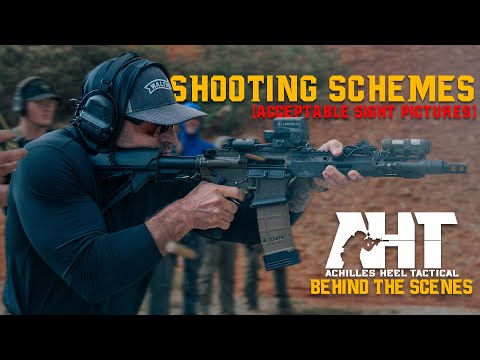
This video introduces the concept of 'shooting schemes' or 'confirmation levels' in firearms training, moving beyond the traditional 'acceptable sight picture.' It explains that different levels of visual information from the sight (dot or front sight) can grant permission to press the trigger, allowing for faster shooting without sacrificing accuracy. The core idea is to match the confirmation level to target difficulty, distance, and shooter skill to optimize performance and get ahead of the 'power curve.'
You've reached the end! 5 videos loaded.
Gun Laws by State
Read firearms regulations for all 50 states + D.C.
Find Gun Dealers
Search licensed FFL dealers near you.