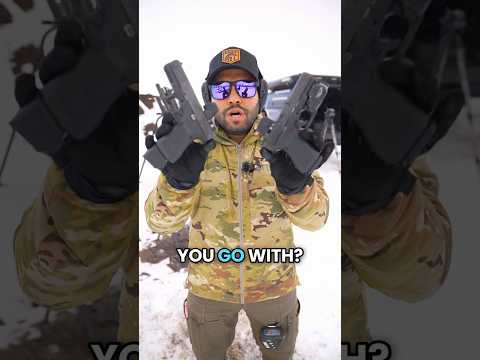
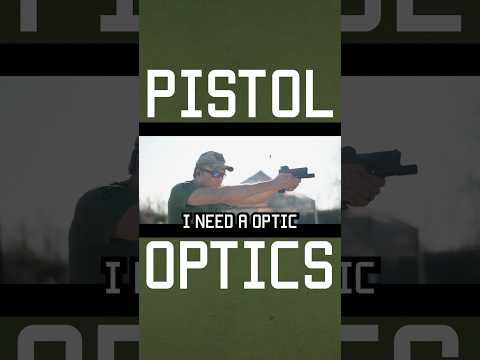
This video emphasizes that choosing the right pistol optic depends heavily on the user's mission and environment. Factors like competitive shooting, everyday carry, law enforcement duties, and environmental conditions (dusty, rainy, urban, jungle) all influence optic selection. The primary mission dictates whether the optic is for competition, long-range, close-quarters, or concealed carry.
This video compares Trijicon's SRO (open emitter) and HD (closed emitter) red dot sights, highlighting the pros and cons of each design. The SRO offers a wider field of view and a brighter reticle, but is more susceptible to debris. The HD, while having a green tint, is more robust against environmental elements like snow and mud, allowing for quick clearing.
This video emphasizes that firearm reliability is not solely dependent on the manufacturer or model, but rather a complex interplay of factors. Individual firearms, even of the same model and serial number, can exhibit unique performance characteristics. Shooter technique, ammunition type and quality, magazine function, maintenance, and environmental conditions all significantly influence a firearm's perceived reliability. Understanding these variables is crucial for accurate assessment and troubleshooting.
This video details an attempt to replicate the iconic mile-long soup can shot from the movie 'Shooter' using a CheyTac M200 Intervention rifle. The host, demonstrating high authority in extreme long-range ballistics, explains the complex ballistics involved, including MOA calculations, spin drift, and the impact of ammunition temperature. Ultimately, the team concludes that while the rifle is exceptionally accurate, hitting such a small target at extreme distances is more about luck than repeatable skill, debunking the movie's portrayal.
Choosing the right pistol optic depends on your primary mission and operating environment. Consider factors like competitive shooting, everyday carry, law enforcement use, and environmental conditions such as dust or rain. Your specific needs will dictate the features you prioritize in an optic.
This video features a medical scientist discussing the significant rise in autism rates. The scientist explains that the increase is attributed to environmental and lifestyle factors rather than over-diagnosis. Key factors discussed include C-section rates, ultrasound use, dietary changes affecting the microbiome, and exposure to toxins like glyphosate. The scientist highlights that the placenta concentrates chemicals, leading to increased fetal exposure.
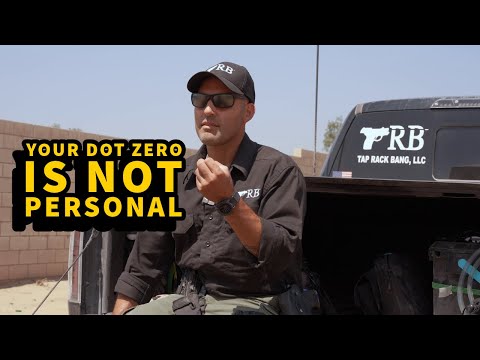
This video provides essential guidance for new shooters on properly zeroing a red dot optic. It emphasizes that the zero is specific to the optic, slide, and barrel combination, not the shooter. The instructor advises against relying on laser bore sighters as a final zeroing method and recommends bench resting for accuracy, suggesting a 15-yard zero can achieve a 25-yard zero for 9mm.
This video demonstrates a one-shot wind call drill designed to test and refine a shooter's ability to estimate and compensate for windage at extended ranges. The instructor uses an AIAX rifle in 6.5 Creedmoor and highlights the importance of accounting for significant wind effects over a valley, adjusting their wind call after an initial miss to achieve a positive impact.
The video emphasizes that the choice of a pistol optic is heavily influenced by the user's mission and environment. Factors like competitive shooting, everyday carry, law enforcement duties, and environmental conditions (dusty, rainy, urban, jungle) all play a role in determining the ideal optic. The user's specific needs, such as range requirements and concealability, are crucial considerations.
This video demonstrates a weapons-based defense technique focusing on controlling an aggressor's mobility using environmental factors like a wall. The instructor emphasizes trapping the subject on multiple sides by integrating body positioning, the ground, and the wall to create a lock-up scenario. This technique aims to facilitate weapon access or further defensive actions.
This video from FalconClaw explains how long a vehicle, specifically a Toyota Hilux, remains visible on thermal imaging after being driven. The expert instructor demonstrates that while a general rule of ~2 hours for cooling exists, it's heavily influenced by factors like car type, drive duration, wind, sun exposure, and ambient temperature. The explanation is supported by a time-lapse thermal imaging sequence.
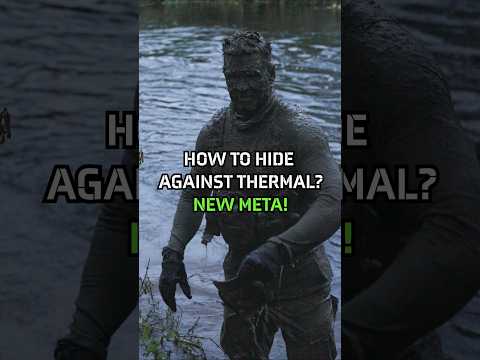
This video from FalconClaw explores the effectiveness of water as a concealment method against thermal imaging. Expert Lucas Parsons demonstrates how submerging in cold river water, especially when combined with mud, can effectively hide a heat signature from both drone and handheld thermal devices. The experiment highlights situational effectiveness and the impact of environmental factors like water and air temperature.
Gun Laws by State
Read firearms regulations for all 50 states + D.C.
Find Gun Dealers
Search licensed FFL dealers near you.