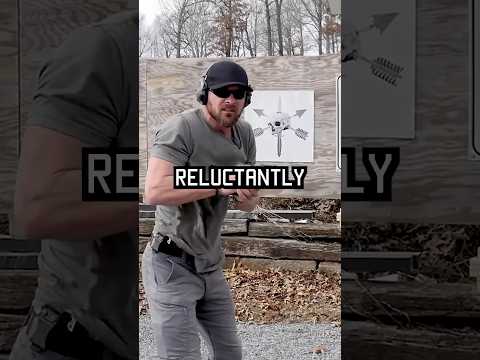
This video demonstrates a technique for drawing a concealed firearm from under a baggy t-shirt, specifically when carried at the 3:00 position. The method emphasizes pulling the shirt material away with the strong hand while exaggerating the thumb pull to create sufficient clearance for a smooth and efficient draw. The instruction covers the entire process from concealment to drawing, engaging, and reholstering.
This video addresses common issues when switching from iron sights to pistol optics, specifically the difficulty in finding the dot. It explains how traditional iron sight training, which involves a slightly elevated barrel, creates muscle memory that hinders optic acquisition. The instructor advises a more horizontal presentation to ensure the dot is visible earlier.
This guide details a critical home defense technique focusing on dynamic safety manipulation and proficient chambering of a round. The instruction emphasizes making safety engagement and disengagement an automatic, fluid motion integrated with presenting the firearm. It highlights the importance of maintaining trigger discipline and scanning before aiming, crucial for safety in high-stress scenarios. The speaker's experienced tone suggests this is vital training for readiness.
This video demonstrates a basic technique for concealed carry, specifically how to present a firearm holstered in a waistband under a button-down shirt. The presenter shows the visual of the firearm and holster when the shirt is lifted. This technique is suitable for individuals looking to carry a firearm discreetly in everyday attire.
This guide outlines a progressive approach to firearm handling, starting with fundamental hold and presentation. It emphasizes controlled trigger manipulation and gradually introduces more complex skills like retention and holstering. The instruction, delivered by an experienced presenter from GBRS Group, suggests a step-by-step advancement of skill levels, culminating in concealed carry practice.
This video showcases the Kimber Stainless II pistol, identified by its 'STAINLESS II, Kimber, Yonkers NY USA, PROPRIETARY DSGN.' engraving. The firearm is presented and then demonstrated being fired at an indoor shooting range, with the Kimber logo clearly visible. The presentation is casual, indicating a hobbyist's perspective.
This video explores the effectiveness of point shooting at various distances, from 7 to 25 yards, by comparing accuracy and speed with and without firearm sights. The instructor, Alyssa Seymour, aims to identify personal limits for point shooting and highlight the tendency to over-confirm with sights, especially at closer ranges. The drill emphasizes becoming more target-focused and understanding the balance between speed and accuracy.
This guide details a technique for automating safety manipulation during firearm presentation, drawing from the expertise of DJ Shipley from GBRS Group. It emphasizes integrating safety engagement and disengagement into the muscle memory of presenting a rifle, crucial for avoiding common errors like forgetting to disengage the safety during drills. The instruction highlights maintaining thumb tension for consistent manipulation.
This guide details an aggressive shooting stance taught by DJ Shipley of GBRS Group, emphasizing body disassociation and a solid lower body foundation. The technique, likened to shooting a spitball, allows for efficient application of the OODA loop and is presented as universally applicable across different firearm platforms and even hand-to-hand combat. The instruction highlights the importance of a consistent, efficient stance for optimal performance.
This video strongly advises against using firearms loaded with blank ammunition for self-defense. The instructor explains that blanks offer no projectile and can escalate a dangerous situation, potentially provoking an armed assailant to fire live rounds. Presenting an unloaded firearm is discussed as a statistically effective deterrent, but the speaker emphasizes the importance of being prepared to use a loaded firearm if necessary.
This video demonstrates John Lovell's '3 Count Draw Stroke' technique for efficiently drawing a firearm from an Appendix Inside the Waistband (AIWB) holster. The method breaks down the draw into three distinct counts: defeating the garment and establishing a master grip, lifting the firearm and bringing the support hand into position, and finally pressing out, prepping the trigger, and firing the shot. While presented humorously as an 'expert' tutorial, it highlights key principles of a smooth and effective draw.
This video demonstrates a critical tactical drill focusing on low ready firearm presentations, emphasizing speed and accuracy for CQB scenarios. Instructor Brad Geary highlights the importance of smooth execution and aiming for the chest box, aiming for a one-second draw time. The drill is designed to build proficiency under pressure.
Gun Laws by State
Read firearms regulations for all 50 states + D.C.
Find Gun Dealers
Search licensed FFL dealers near you.