This video emphasizes the importance of emotional control and managing ego in shooting, highlighting reliability as paramount for any firearm. It delves into practical advice on gear selection, focusing on proven track records over subjective feel, and discusses the nuances of self-defense decision-making beyond legal permissibility. The speaker, with significant experience, stresses the need for demonstrated performance and understanding the 'why' behind techniques when teaching others.
This video, from FalconClaw, addresses a viewer's question about basic 'body gear' for beginners. The instructor, Redi Ilia, emphasizes that 'body gear' is not a standard term and clarifies the different contexts for 'starting out,' ranging from military enlistment to hobbies like larping or citizen preparedness. The core advice is to invest in high-end gear for serious applications and consider cheaper options for recreational use, with a strong recommendation to prioritize proper footwear above all else.
This video offers insights from NRL Hunter matches, emphasizing that gear doesn't guarantee success and highlighting common shooter challenges like overthinking, wind difficulties, unbalanced practice, and equipment trust issues. The content is presented with an instructional tone from an experienced perspective, suggesting practical lessons learned from competitive shooting scenarios.
This guide, drawing from the expertise of Eric from Barrel & Hatchet, emphasizes a pragmatic approach to acquiring tactical gear. It advises prepared citizens to avoid hype, prioritize value and reliability over brand name, and invest in training. Key takeaways include selecting functional gear like the WETWRX Wraith Hood and PVS-14, understanding armor levels, and focusing on capability development.
This video, from an experienced instructor, challenges the common assumption that rifle calibers and heavy body armor are always best for civil unrest. It advocates for pistol caliber carbines (PCCs) like the MP5, emphasizing their advantages in ammunition capacity, lighter weight, and the ubiquity of 9mm ammunition. The instructor also highlights critical considerations for medical emergencies in austere environments and advises against blindly following military or special operations loadouts for civilian preparedness.
This video offers a candid review of various EDC and tactical gear, highlighting instances where expensive items didn't meet practical needs. The speaker, drawing on extensive personal experience and a background that signals high authority in the EDC community, advises viewers to prioritize utility and workflow over premium materials or aspirational purchases. Key takeaways include a framework for evaluating new gear based on friction reduction, preparedness enhancement, and workflow integration.
Elliott Delp, an experienced firearms content creator, explains his rationale for selecting the Aimpoint Micro T-2 red dot sight for his 'Shit Hits The Fan' (SHTF) rifle. He addresses the common debate between red dots and LPVOs, emphasizing his preference stems from extensive training and familiarity. Delp also highlights his proactive approach to power management by maintaining a substantial battery stockpile.
This video from Regular Guy Training LLC critically examines common firearms community discussions around gear selection, particularly focusing on red dot sights. The instructor, demonstrating high authority and expertise, explains the nuanced trade-offs in optic features like 'shake awake' technology and battery efficiency, using Trijicon RMR models as examples. The content aims to educate viewers on making informed decisions beyond simplistic memes.
This video argues that the gun community's hyperfixation on AR-15 barrel lengths and other technical firearm minutiae distracts from more critical aspects of preparedness and personal well-being. The speaker emphasizes that physical fitness, financial health, and overall life balance are more important than debating optimal barrel lengths. The content encourages viewers to focus on practical self-improvement rather than solely on gear acquisition and justification.
This video explains how shot distance impacts body armor effectiveness. Bullet velocity, influenced by barrel length, bullet type, and distance, is the primary factor in armor penetration. Longer distances lead to reduced velocity, making armor more likely to stop a projectile. However, real-world scenarios involve variables beyond simple distance, such as training and engagement circumstances.
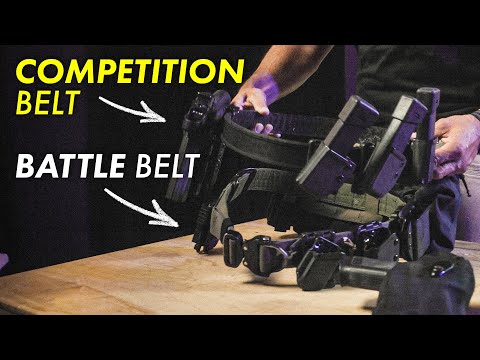
This video from FieldCraft Survival explains the differences between competition belts, duty belts, and tactical belts, advocating for a competition-style two-belt system as the most cost-effective entry point for new firearms trainees. The instructor emphasizes that skills are paramount and equipment should support, not inhibit, training, noting that competition belt setups translate directly to duty belt configurations for consistent muscle memory.
This video from Joel Park, a seasoned shooter, addresses the complex decision of switching handgun platforms, particularly for competitive shooters like those in USPSA. He emphasizes that switching is a significant commitment requiring substantial investment in time, ammunition, and practice to regain proficiency. Park advises that the decision should be driven by a genuine need or capability enhancement, not just novelty, and that the transition period can range from two to six months for a shooter to reach their previous performance level.
Gun Laws by State
Read firearms regulations for all 50 states + D.C.
Find Gun Dealers
Search licensed FFL dealers near you.