This guide details the modification process for a California-compliant AR-15, focusing on components that contribute to a stable shooting platform and compliance with state regulations. It covers the installation of a specific muzzle brake, barrel choice, optic and magnifier setup, trigger upgrade, fixed magazine solution, and other internal and external enhancements. The build emphasizes comfort, budget, and purpose, resulting in a rifle described as exceptionally flat-shooting.
This entry details the rising cost of tungsten, a key material in AR-15 buffer systems (H1, H2, H3). The video highlights that tungsten's price increase directly impacts buffer costs, prompting a recommendation to purchase sooner rather than later. The speaker, identified as an industry professional, expresses uncertainty about the specific market drivers behind the price hike but emphasizes the tangible effect on firearm component expenses.
This video from Regular Guy Training LLC provides an expert assessment of the Rare Breed FRT-15L3, focusing on its intended use for enhanced capability on general-purpose rifles. The instructor, demonstrating high authority, emphasizes practical reliability testing using common, lower-power ammunition like PMC Bronze and Wolf Military Classic. The review highlights the importance of a rifle's configuration, including gas system length, buffer weight, and spring type, in ensuring consistent cycling, deeming failures with such ammunition an 'instant fail' for a training tool.
This guide explains the critical role of the AR-15 buffer system in rifle function, covering its components, history, and tuning capabilities. It details how buffer weight and advanced upgrades like hydraulic or captured spring systems can optimize performance, mitigate malfunctions like bolt bounce, and reduce felt recoil. Instruction is provided by an expert with high technical knowledge of AR-15 mechanics.
This guide explains why standard carbine buffers may not be optimal for AR-15 platforms and details upgrade paths. It covers the benefits of heavier buffers (H1, H2, H3) for smoother cycling and reduced recoil. Advanced options like the Odin Works Adjustable Buffer and the Armaspec Stealth Recoil System are presented as solutions for fine-tuning performance and minimizing noise. The information is presented from the perspective of AT3 Tactical, a firearms parts retailer, indicating a high level of expertise.
This video explains how buffer weights are used to tune commercial rifles, particularly when dealing with ammunition variables and overgassed systems. The instructor details how different buffer weights (H1, H2, H3) can mitigate issues like bolt carrier bounce and fast cycling caused by higher-pressure ammunition, by slowing down the action. He emphasizes that military rifles are designed with known variables, while commercial rifles must accommodate a wider range of ammunition, making buffer tuning a common adjustment.
This video provides an in-depth analysis of AR-15 buffer weights and their role in managing gas system dynamics, particularly in overgassed or improperly gassed firearms. The instructor, with extensive experience in military and manufacturer settings, explains how buffer weights affect bolt velocity, carrier bounce, and overall firearm reliability. He emphasizes that buffers are for mechanical tuning, not recoil management, and advises on selecting appropriate weights based on ammunition type and firearm configuration to ensure optimal function across various conditions.
This guide details Joel Park's preferred carbine setup, featuring an ADM MOD 2 in 5.56 NATO. Key components include a Surefire RC3 suppressor, Holosun AEMS red dot on an ADM QD mount, and a T-Rex Arms sling. The setup prioritizes shootability, reliability, and ease of maintenance, with specific attention paid to the trigger, charging handle, and buffer system for suppressed use.
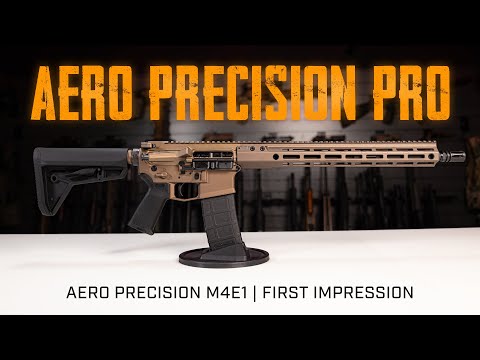
This video provides a first look at the Aero Precision M4E1 Pro rifle, highlighting its features and initial impressions. The reviewer discusses the $2,000 price point, comparing it to other offerings, and details the ambidextrous lower receiver, charging handle, M-LOK rail, cold hammer-forged barrel, and ALG trigger. Initial testing involved around 100-200 rounds, including use with a binary trigger, with plans for further suppressed testing and build integration with Optics Planet and Griffin Armament.
This video details a specific AR-15 rifle that introduced the speaker to firearms, highlighting its evolution and modifications. It covers the rifle's original build components, including a Double Star Corporation lower and a GG&G upper with a 16-inch chrome-lined M4 profile barrel. The discussion extends to upgrades like an ambidextrous safety for left-handed shooters, an H2 buffer for improved gas system function, and a new bolt, bringing the firearm into a more modern configuration. The speaker also contrasts this with their own first AR-15 build from PSA.
Gun Laws by State
Read firearms regulations for all 50 states + D.C.
Find Gun Dealers
Search licensed FFL dealers near you.