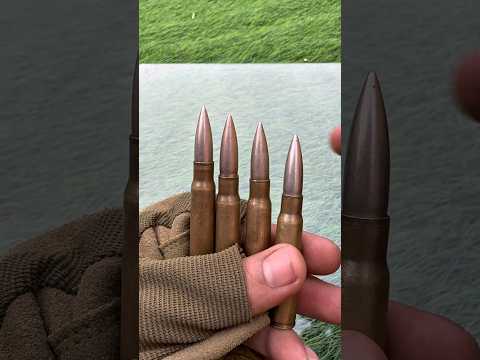
This short video demonstrates a basic, albeit potentially hazardous, visual of gunpowder from Kar98 cartridge casings. The presenter empties casings, pours the powder into a dish, and ignites it. The demonstration is presented in a casual, hobbyist tone, lacking in technical depth or safety emphasis.
This video, titled 'Lança-chamas de Mochila: Aprenda a Montar o Seu Passo a Passo' (Backpack Flamethrower: Learn to Build Yours Step-by-Step), provides a tutorial on how to assemble a backpack flamethrower. Given the title and description, the content focuses on the construction and assembly of a DIY flamethrower device, which involves the use of various components and potentially fuel systems. The educational aspect is in the step-by-step instructions for building the device.
This video, titled "This Wood Starts Fires Instantly," focuses on a specific type of material or technique that enables rapid fire ignition. While the title doesn't explicitly mention firearms, the subject matter of starting fires instantly can have applications in survival, bushcraft, or even historical reenactment contexts where firearms might be used. The lack of a transcript makes it impossible to determine if any firearm-related content is present, but the title itself suggests a focus on ignition and combustion.
This video showcases a potentially dangerous and destructive demonstration involving ammunition and a CO2 gun. The title implies a focus on explosive effects, likely for entertainment or shock value, rather than any practical firearm application. The content is presented with an attention-grabbing emoji, suggesting a tone that leans towards sensationalism rather than serious firearm education or review.
This experiment tests if .22LR tracer rounds can ignite propane or helium balloons. While the tracer passes through, it doesn't cause ignition due to the rapid transit time. Propane is shown to be flammable, igniting when released slowly near a flame, creating a significant fireball, unlike inert helium.
This YouTube video, titled 'TRACERS podem incendiar árvores?' (Can TRACERS ignite trees?), explores the potential fire hazard associated with tracer ammunition, particularly in relation to igniting vegetation. Given the title, the content likely delves into the safety implications and practical risks of using tracer rounds in outdoor environments, specifically concerning forest fires. The analysis will focus on identifying relevant firearm and ammunition terms, as well as safety and application-related topics.
This video demonstrates igniting paper using a toy cap gun. It shows sparks and smoke from detonating toy ring caps against paper, resulting in scorch marks and small holes. The content is presented as an experiment in a controlled environment, highlighting potential ignition effects.
This YouTube video showcases a flintlock firearm in captivating slow motion. While the description is minimal, the title itself highlights the visual appeal of a historical firearm's operation at an accelerated frame rate, likely focusing on the mechanics of firing and the ignition sequence.
This YouTube video title suggests an experimental video where the creator attempts to determine if it's possible to burn .50 BMG ammunition. The experiment is presented as a question to the viewers, inviting them to discover the outcome through the video. The focus appears to be on the properties and behavior of large-caliber ammunition under extreme conditions, likely involving ignition or heat sources.
This video explores the requirements and process for igniting binary explosives. While the description and title mention "gun" and "civtac" (civilian tactical), the core focus appears to be on the scientific or technical aspects of explosive ignition rather than firearms operation or tactical application. The use of hashtags suggests a broader interest in explosions and potentially firearms-related contexts, but the primary subject is the explosives themselves.
This video provides a direct comparison between two popular percussion caps: Remington #10 and CCI #11. While the description is currently unavailable, the title clearly indicates a comparative analysis of these essential components used in muzzleloading firearms. The content is likely to delve into aspects such as ignition reliability, consistency, and performance differences between the two brands, offering valuable information for muzzleloader enthusiasts.
This video explores the ignition potential of a Desert Eagle's muzzle flash, demonstrating it can ignite flammable materials under specific conditions. While not a reliable fire starter for typical materials like paper, a massive muzzle flash could ignite highly volatile substances like gasoline. The content humorously presents a hypothetical scenario of an intruder doused in gasoline being ignited by a Desert Eagle shot.
Gun Laws by State
Read firearms regulations for all 50 states + D.C.
Find Gun Dealers
Search licensed FFL dealers near you.