This video critically examines the effectiveness of point shooting versus using sights (iron or red dot) for pistol engagement. It argues that while point shooting may have niche applications, proper sight acquisition and a solid index point are crucial fundamentals for all shooters, especially for self-defense and competitive scenarios. The discussion highlights that red dot sights simplify aiming by requiring focus on the target, offering a clear advantage over iron sights which demand more complex alignment.
This video addresses the common issue of slow and over-confirmed first shots from a holster or after movement. Instructor Joel Park explains that the problem often stems from an 'index issue' or 'target focus issue,' where the shooter struggles to bring the sights to the target efficiently. He recommends a 'draw to sight picture' drill, emphasizing consistent sight acquisition without over-aiming or looking away from the target.
Ben Stoeger explains that at high speeds, the red dot sight functions more as a confirmation tool than a primary aiming device. Through extensive training, the shooter's subconscious mechanics ensure the firearm is pointed correctly, and the red dot simply confirms this alignment before the trigger is pulled. This technique allows for faster engagement by relying on predictive pace and consistent fundamental skills.
This video provides expert instruction on effectively shooting with a red dot optic on a handgun. It emphasizes developing a proper index point for consistent grip, focusing on the target rather than the dot, and understanding that the dot should 'streak' or 'flash' across targets during rapid engagement. The instructor, Trench Grenade, demonstrates good and bad examples of target transitions and dot acquisition, highlighting how target focus and allowing the dot to move naturally leads to faster and more effective shooting.
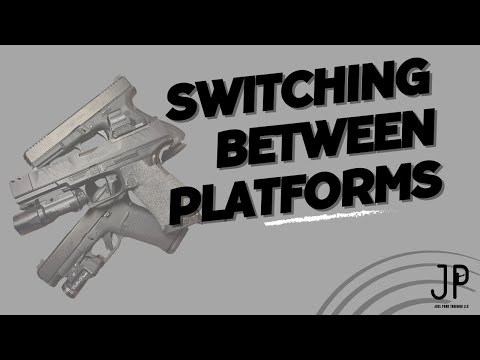
Joel Park discusses the challenges of switching between different firearm platforms, emphasizing that it's not a simple task for most individuals. He highlights 'index'—the ability to bring a firearm to a consistent sight picture—as a primary hurdle due to variations in grip diameter, frame feel, and muzzle-to-rear-slide angle between different models. Park suggests that while principles of grip and pressure remain similar, subtle adjustments are necessary, and recommends dry fire sessions to build familiarity and reduce transition time.
This guide details effective techniques for shooting with a handgun-mounted red dot sight, emphasizing target focus over dot focus. It covers establishing a proper grip and index point, drawing and firing, transitioning between targets, and the concept of 'dot occlusion' for improved accuracy. The instruction comes from an experienced shooter demonstrating proper and improper methods.
Ben Stoeger discusses the common misconception that a larger or more apparent red dot sight is inherently better for inexperienced shooters. He explains that the need to 'find the dot' often stems from a lack of a developed index point, leading to a less efficient shooting process. Experienced shooters, Stoeger notes, focus on acquiring the target and confirming the dot's position quickly, rather than searching for it. He contrasts this with experienced shooters who might choose specific dot sizes or colors due to personal preferences like astigmatism, articulating their reasoning based on performance and presentation.
This guide details an efficient pistol drawing technique emphasizing a high grip and proper hand placement. It focuses on using an index point with the middle finger to ensure correct hand positioning, followed by thumb engagement with retention devices on holsters. The technique aims to minimize leverage and prepare for subsequent actions by establishing a high grip as the pistol clears the holster.
You've reached the end! 8 videos loaded.
Gun Laws by State
Read firearms regulations for all 50 states + D.C.
Find Gun Dealers
Search licensed FFL dealers near you.