This video provides a real-life comparison of the M4A1 firearm as depicted in the Battlefield 6 beta. The presenter highlights the detailed accuracy of the in-game model, noting its resemblance to a Global War on Terror era M4A1. Specific attention is given to the low-profile gas block, Pikatini rail, and folding front sight, suggesting their inclusion in the game aids optics usage. The presenter also points out the accurate FN markings on the lower receiver, even if slightly altered for licensing in the game.
This review of the Victor Industries VK1 5.56 piston upper highlights its smooth operation and impressive recoil mitigation, even after nearly 1000 rounds. The presenter, who has extensive experience with firearms, details the upper's components, including its chrome bolt carrier group, thermal-fit barrel, and low-profile gas block, and discusses its accuracy with various ammunition types. The review emphasizes the upper's reliability and well-tuned gas system, making it a strong contender in the piston-driven AR market.
The Franklin Armory OSPREY piston AR15 rifle, showcased at Shot Show 2024, features a novel low-profile gas piston system designed for suppressed and unsuppressed operation without manual adjustments. This system optimizes gas pressure for smooth cycling and eliminates the need for piston springs, reducing parts count. It's available in traditional semi-automatic and Franklin Armory's patented binary firing system configurations, with pricing starting at $549 for the binary version and $1369 for the semi-auto. Complete uppers are also offered for $849.
This video provides a detailed, step-by-step guide on how to upgrade an M&P-15 and similar AR-platform rifles. It covers the removal of the OEM gas block, installation of a free-float handguard, replacement of the Mil-Spec trigger, and the installation of a new bolt catch. The tutorial aims to empower viewers with the knowledge to perform these common modifications, contributing to a more informed and capable AR-15 shooting community. It also touches upon the benefits of building versus buying an AR-15.
This YouTube video from Brownells Gun Tech™ features Caleb Savant providing a practical tip for installing a low-profile gas block on an AR-15. The technique focuses on utilizing the setscrew hole on the underside of the gas block and a dimple on the barrel to ensure perfect alignment when gas block manufacturers use that hole for their drilling process. This method is specifically for AR-15s with setscrew-anchored gas blocks and dimpled barrels, simplifying the installation process and guaranteeing precise alignment for optimal gas system function.
This guide from The VSO Gun Channel provides expert advice on selecting and avoiding specific types of AR-15 gas blocks. It highlights the superior reliability of cross-pin front sight tower gas blocks and integrated monoblock barrels, while cautioning against clamping gas blocks and those made from aluminum. The video also details considerations for low-profile and adjustable gas blocks, emphasizing the importance of secure attachment methods and material choice for long-term performance.
This video introduces the new Bullet Proof® Adjustable Lo-Profile AR-15 Gas System from Wilson Combat, presented by Paul Levy of Brownells. The system features a low-profile gas block made of 4140 steel with an integrated stainless steel gas tube. Its key feature is a slot-head screw allowing adjustment of gas flow through 16 positive-click settings, enabling users to optimize for different ammunition. The self-cleaning mechanism scrapes out carbon fouling with each adjustment. Setscrews secure the block to pre-dimpled barrels, and the straight gas tube simplifies installation. The system is available with various gas tube lengths and for different barrel diameters.
This guide details the use of jigs from Forward Control Designs and Modern Armory for installing and removing gas tube roll pins in low-profile AR-15 gas blocks. It covers proper punch selection, techniques to avoid damaging roll pins, and considerations for stubborn or mushroomed pins. The instructor also suggests potential modifications for enhanced functionality.
This video provides an in-depth review of the Cotton Arms adjustable gas block, highlighting its affordability and functionality for AR-15 and AR-10 platforms. The instructor details its construction from 4140 steel, its low-profile design, and the ease of side-mounted adjustment. He shares extensive real-world testing data, demonstrating how to tune the gas block for optimal cycling with various ammunition types, including steel-cased rounds, and discusses potential long-term maintenance concerns like carbon buildup.
This video from Gun Talk LIVE features Tim from Doublestar discussing their AR-10 pistol, the Star 10P, and various accessories. The discussion highlights the trend of firearm customization and Doublestar's focus on premium accessories like their G10 Stronghold rail panels and pistol grips. They also introduce a new ambidextrous safety selector and the Strong Arm brace, emphasizing user-configurable options and durable materials.
This guide, presented by Dave Timm, details the expert installation of AR-15 low-profile gas blocks. It emphasizes the superior reliability of the pinned method for duty rifles, while also covering set screw installation with barrel dimpling and high-temperature thread locker. The instruction highlights the importance of precision tools and techniques for ensuring a secure and functional gas block, crucial for rifle performance under stress.
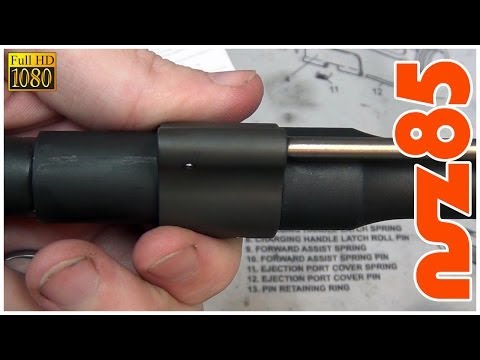
This guide details a practical method for aligning a low-profile gas block on an AR-15 barrel, as demonstrated by experienced firearm builder nsz85. The technique involves using pencil marks and a straight edge to ensure precise alignment of the gas port and gas block, crucial for proper gas system function. This method accounts for slight tolerances between the barrel gas port and the gas block hole, offering a reliable approach for builders.
Gun Laws by State
Read firearms regulations for all 50 states + D.C.
Find Gun Dealers
Search licensed FFL dealers near you.