Ben Stoeger addresses training challenges for individuals with restricted firearm access. He recommends using realistic replicas or airsoft guns for consistent home practice. This allows for skill development in drawing, aiming, and trigger control, which can then be applied when live firing at the range. The core principle is consistent repetition of fundamental skills, even without live ammunition.
This video outlines a conservative annual training regimen combining dry fire and live fire practice. It emphasizes a structured approach to accumulating a significant number of repetitions, even with a limited budget, by incorporating both 9mm and .22LR ammunition. The focus is on consistent skill maintenance and enhancement over time.
This guide outlines a progressive training methodology for concealed carry draws, emphasizing isolating the draw stroke with basic clothing before incorporating overgarments. Instruction from DJ Shipley of GBRS Group, a former Tier 1 Special Operations member, highlights the importance of a master grip, safe re-holstering, and high-repetition training for proficiency.
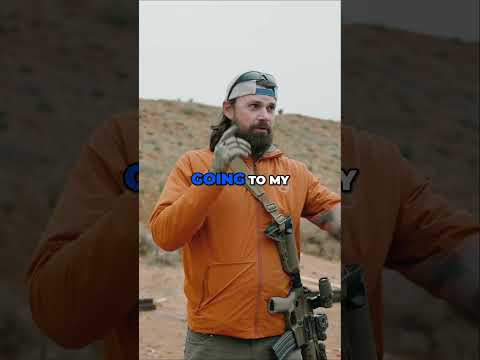
This short discusses the concept of switching shoulders during movement, particularly in cross-body transitions. The speaker, a right-handed individual, notes that while switching shoulders is possible, it leads to slower target acquisition and is more challenging when using the non-dominant eye. The emphasis is on practicing these transitions to improve proficiency.
This guide details a structured dry fire practice routine led by Mike Seeklander, a 2019 IDPA World Champion. It emphasizes strict safety protocols and a daily 100-repetition drill broken into three distinct sets to build and refine shooting skills when live range time is limited. The routine focuses on perfect form, speed, and technical execution, with a recommendation to log progress and integrate with live fire for recoil management.
This video from Geauga Firearms Academy emphasizes the critical role of mechanics and repetition in developing fast and accurate shooting skills. Instructor Neil explains that proficiency is achieved when actions like drawing a firearm become a conditioned response, similar to instinctively catching an object. He stresses the importance of proper instruction to avoid 'training scars' and advocates for consistent practice to build muscle memory for drawing, presenting, and engaging targets effectively, noting that correct mechanics alone contribute significantly to accuracy.
This drill, demonstrated by USCCA training counselors, focuses on efficient and repetitive practice of the tactical reload. It utilizes two magazines, one with a single round and one fully loaded, to create a continuous cycle of shooting and reloading. The drill emphasizes muscle memory and speed in a controlled environment, making it suitable for both indoor and outdoor ranges.
You've reached the end! 7 videos loaded.
Gun Laws by State
Read firearms regulations for all 50 states + D.C.
Find Gun Dealers
Search licensed FFL dealers near you.