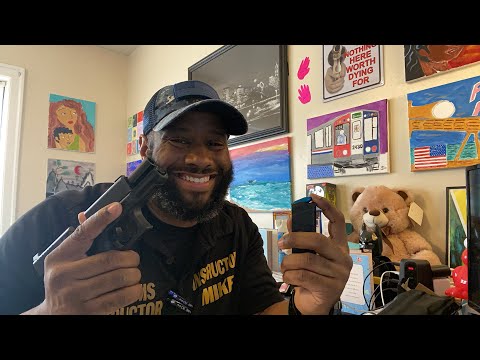
This video demonstrates how to clear common firearm malfunctions, specifically Type 1 and Type 2. The instructor emphasizes a systematic approach to ensure the firearm is safe and ready to fire again, stressing the importance of proper procedure to avoid further issues. The core technique involves identifying the malfunction, manipulating the firearm to clear it, and then re-acqureing a firing grip and sight picture.
This video demonstrates how improper slide manipulation during a reload can cause a Type 2 malfunction. Instructor Mike explains that obstructing the ejection port with a finger can cause a round to bounce back, leading to a failure to eject. The corrective action involves the 'Tap, Rack, Assess' procedure to clear the malfunction and return the firearm to a ready state.
This guide details how to clear a Type 2 malfunction, commonly known as a 'stove pipe,' using the TRAP acronym. Instructor Mike, a certified professional, demonstrates the technique on a Glock 19. The process involves tapping the magazine, racking the slide, assessing the threat, and pressing the trigger if necessary. This technique is crucial for maintaining firearm readiness under stress.
Jeff Gonzalez of Trident Concepts demonstrates essential AR-15 magazine changes and malfunction clearances for Brownells Daily Defense. The guide covers reloads with an open and closed action, emphasizing the 'push-pull' technique for magazine seating. It details clearing Type 1 (failure to fire) and Type 2 (failure to feed/eject) malfunctions using the 'tap, tug, roll, rack' immediate action drill, stressing safety and consistent execution.
Instructor Mike introduces 'On-the-Spot Training' focusing on essential firearm malfunction clearance drills. He details procedures for Type 1 (click/no boom), Type 2 (stovepipe), and Type 3 (jam) malfunctions, emphasizing the TRAP (Tap, Rack, Assess, Press) and RRI-RRP (Rip, Rack, Insert, Rack, Assess, Press) methods. The importance of maintaining situational awareness on the threat during clearance and practicing with snap caps is highlighted.
This video demonstrates a Type 2 malfunction clearance drill on the range, emphasizing the 'tap, rack, bang' method. Instructor Mike highlights the importance of proper grip, sight acquisition, and practicing magazine retention during reloads. The instruction focuses on efficient clearing of common firearm stoppages.
This video by Instructor Mike provides a practical guide to clearing Type 1 (failure to fire) and Type 2 (failure to eject) malfunctions. The core technique demonstrated is the 'tap, rack, assess' method, emphasizing forceful magazine seating, slide manipulation, and continuous threat assessment. The instructor uses snap caps for safe practice, recommending multiple magazines and rounds for effective repetition.
This video details the IDF's five-step method for clearing AR-15/M16 malfunctions: Identify, Move, Clear, Reload, and Re-engage. It categorizes malfunctions into Type 1 (click), Type 2 (bolt not closed/open), and Type 3 (bolt locked open, empty mag). The IDF's technique emphasizes moving to cover for Type 2 and 3 malfunctions and includes a 'pull' check after magazine insertion to ensure security, a departure from the standard 'tap, rack, bang'.
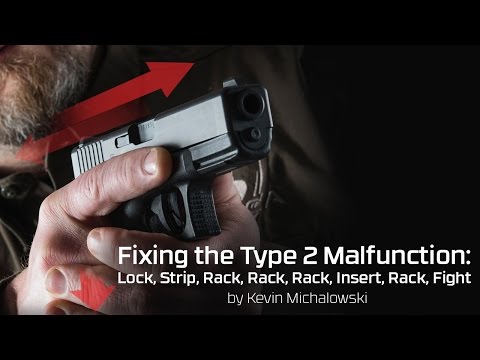
This video, "Into the Fray Episode 27: The Type 2 Malfunction," focuses on a specific firearm malfunction, the Type 2 double feed. The description details the clearing procedure: lock the slide to the rear, strip the magazine, run the slide, reload, and re-engage. It also humorously suggests running away if the initial steps fail. The video promotes a free gun giveaway and directs viewers to USCCA resources for concealed carry information and community engagement through their social media channels.
You've reached the end! 9 videos loaded.
Gun Laws by State
Read firearms regulations for all 50 states + D.C.
Find Gun Dealers
Search licensed FFL dealers near you.