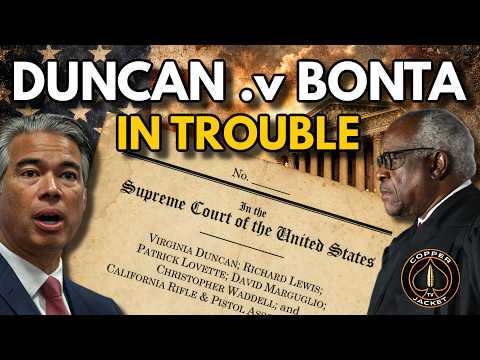
25 States ask SCOTUS to take on Maryland AWB case... If this case falls, AR GUN CONTROL DIES...

Published on January 29, 2022
Duration: 6:17

This video discusses the significant legal challenge to Maryland's Assault Weapons Ban (AWB) being brought before the Supreme Court by 25 states. The core argument is that the ban infringes upon the Second Amendment rights of citizens by prohibiting firearms in 'common use,' as established in the Heller v. DC decision. The case, Bianchi v. Frosh, could have nationwide implications for gun rights if the Supreme Court declines to hear it.

Quick Summary

25 states are urging the Supreme Court to hear the Bianchi v. Frosh case, which challenges Maryland's Firearms Safety Act of 2013 (AWB). They argue the law infringes on Second Amendment rights by banning firearms in 'common use,' a standard established by the Heller v. DC decision. If the Supreme Court doesn't take the case, it could weaken future gun rights challenges nationwide.

Chapters

  1. 00:07Intro: Maryland AWB & SCOTUS Implications
  2. 00:46YouTube Spam Account Removal
  3. 01:11Sponsor: The Second Press
  4. 01:57Maryland Firearms Ban Legal Challenge
  5. 02:48Maryland Law Compromises Second Amendment
  6. 03:31'Common Use' vs. Military Style Firearms
  7. 04:00SCOTUS Duty to Protect Constitutional Rights
  8. 04:29Civilian Marksmanship & AR-15 vs. M16
  9. 05:32Legal Arguments & California Ban Comparison

Frequently Asked Questions

What is the significance of the Bianchi v. Frosh case regarding gun rights?

The Bianchi v. Frosh case challenges Maryland's Assault Weapons Ban (AWB). 25 states are urging the Supreme Court to hear it, arguing the ban infringes on Second Amendment rights by prohibiting firearms in 'common use,' potentially setting a national precedent.

Why are 25 states asking the Supreme Court to hear the Maryland AWB case?

These states argue that Maryland's Firearms Safety Act of 2013 violates the Second Amendment rights of citizens by banning firearms considered to be in 'common use.' They believe the Supreme Court should clarify the scope of protected firearms.

How does the Heller v. DC decision relate to the Maryland AWB case?

The legal argument in the Maryland AWB case references the 2008 Heller decision, which affirmed an individual's right to possess firearms for lawful purposes. Proponents argue this right should extend to commonly used sporting rifles, not just those unconnected to militia service.

What is the main argument against Maryland's Firearms Safety Act of 2013?

The primary argument is that the Act, by banning semi-automatic firearms in 'common use,' infringes upon the constitutional right to keep and bear arms as protected by the Second Amendment, and that such bans are not supported by historical precedent for 'dangerous and unusual' weapons.

Related News

All News →

More 2nd Amendment & Law Videos You Might Like

More from Langley Outdoors Academy

View all →