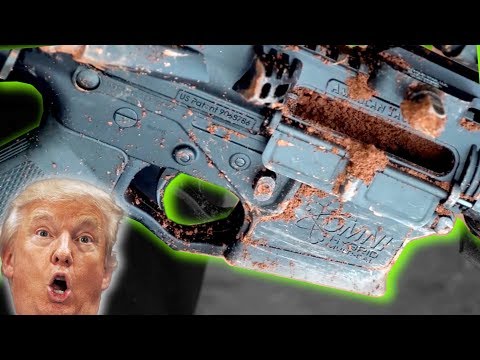
2nd Amendment DOESN'T Protect AR's?! - The Legal Brief

Published on March 8, 2017
Duration: 7:37

This video provides an expert legal analysis from Adam Kraut, Esq. on the 4th Circuit Court of Appeals' decision in Colby v. Hogan, which determined that AR-15 style rifles are not protected by the Second Amendment. The analysis details the court's reasoning, including comparisons to M-16s and the 'weapons of war' doctrine, and discusses the implications of this ruling within the 4th Circuit's jurisdiction.

Quick Summary

The 4th Circuit Court of Appeals, in the en banc decision Colby v. Hogan, ruled that AR-15 style rifles are not protected by the Second Amendment. The court likened them to M-16 rifles and classified them as 'weapons of war' excluded from constitutional protection, impacting firearm regulations within its jurisdiction.

Chapters

  1. 00:00Introduction to 4th Circuit Decision
  2. 00:20Sponsor: Kinetic Development Group
  3. 00:41Colby v. Hogan Decision
  4. 01:00En Banc and Jurisdictional Scope
  5. 01:37Maryland Firearm Safety Act (FSA)
  6. 02:01Levels of Judicial Scrutiny
  7. 03:48Strict Scrutiny Argument
  8. 04:07En Banc Reversal and M16 Comparison
  9. 05:14Impact on Other States
  10. 05:51Paths to Overturning

Frequently Asked Questions

What did the 4th Circuit Court of Appeals rule regarding AR-15s and the Second Amendment?

The 4th Circuit Court of Appeals, in the en banc decision Colby v. Hogan, ruled that AR-15 style rifles are not protected by the Second Amendment. The court likened them to M-16 rifles and classified them as 'weapons of war' excluded from constitutional protection.

What is the significance of the Colby v. Hogan decision?

The Colby v. Hogan decision is significant because it establishes a precedent within the 4th Circuit that AR-15s and similar firearms, along with standard capacity magazines, are not covered by Second Amendment protections. While binding only in its jurisdiction, it can serve as persuasive authority elsewhere.

What legal standards of review were discussed in the 4th Circuit's AR-15 ruling?

The analysis discussed both intermediate scrutiny, which the District Court initially applied, and strict scrutiny, which a previous 3-judge panel argued for. The full en banc court's reasoning effectively bypassed the need for strict scrutiny by deeming the AR-15 outside the scope of Second Amendment protection.

Which states fall under the 4th Circuit's jurisdiction for this ruling?

The 4th Circuit Court of Appeals' jurisdiction includes Maryland, West Virginia, Virginia, North Carolina, and South Carolina. The ruling in Colby v. Hogan is binding within these states.

Related News

All News →

More 2nd Amendment & Law Videos You Might Like

More from TheGunCollective

View all →