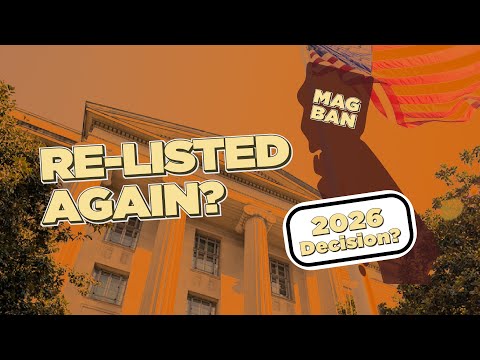
3 Ways SCOTUS Can Handle Duncan v. Bonta

Published on December 29, 2025
Duration: 1:07

This video outlines three potential outcomes for the Duncan v. Bonta case at the Supreme Court of the United States (SCOTUS). The possibilities include accepting the case for oral arguments and an opinion, declining to hear it, or issuing a GVR (Grant, Vacate, and Remand). The discussion touches on the ramifications of each decision and how SCOTUS might handle cases based on other Second Amendment rulings.

Quick Summary

The Supreme Court has three primary options for handling the Duncan v. Bonta case: accept it for oral arguments and an opinion, decline to hear it, or issue a GVR (Grant, Vacate, and Remand). A GVR involves vacating the lower court's decision and sending the case back for reconsideration based on new rulings.

Chapters

  1. 00:00Introduction to Duncan v. Bonta Case Possibilities
  2. 00:04Accepting the Case for Oral Arguments
  3. 00:09Declining to Take the Case
  4. 00:15Understanding a GVR (Grant, Vacate, Remand)
  5. 00:22Holding the Case or Awaiting Other Rulings
  6. 00:33Granting Review Without Scheduling
  7. 00:48Vacating Lower Court Loss and Remanding

Frequently Asked Questions

What are the three main ways the Supreme Court can handle the Duncan v. Bonta case?

The Supreme Court can accept the case for oral arguments and issue an opinion, decline to hear the case, or issue a GVR (Grant, Vacate, and Remand). A GVR means they grant review, vacate the lower court's decision, and send it back for reconsideration based on new rulings.

What does it mean if the Supreme Court declines to take a case like Duncan v. Bonta?

If the Supreme Court declines to hear Duncan v. Bonta, the lower court's decision, in this instance from the Ninth Circuit, remains in effect. This means the legal precedent set by that lower court ruling continues to stand without federal high court review.

How does a GVR (Grant, Vacate, Remand) affect a case like Duncan v. Bonta?

A GVR allows the Supreme Court to vacate the Ninth Circuit's ruling in Duncan v. Bonta. The case is then remanded back to the lower court to reconsider its previous decision in light of any new, relevant rulings the Supreme Court has recently issued.

Can the Supreme Court delay a decision on Duncan v. Bonta?

Yes, the Supreme Court can effectively put a case on hold. They might grant review but not schedule briefing or hearings, waiting for decisions in other Second Amendment cases that could impact the rationale for Duncan v. Bonta.

Related News

All News →

More 2nd Amendment & Law Videos You Might Like

More from CRPA TV

View all →