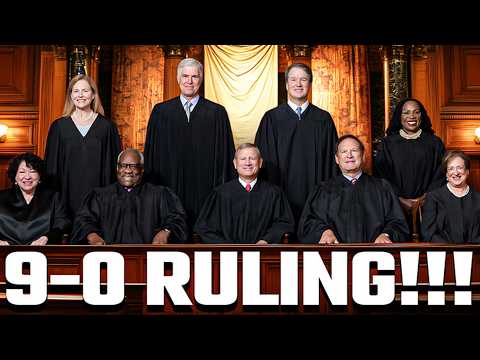
All Americans Affected: Supreme Court Issues 9-0 Unanimous Decision With Major Nationwide Impact!

Published on March 24, 2026
Duration: 8:18

This video provides an expert-level analysis of a significant Supreme Court decision impacting federal government accountability, particularly concerning law enforcement raids. The speaker, an expert in legal matters related to firearms and civil rights, details the FBI's mistaken raid on the Martin family's home and the subsequent legal battle. The 9-0 Supreme Court ruling clarified the limits of the 'discretionary function exception' to the Federal Tort Claims Act, emphasizing that law enforcement errors in basic operational duties are not automatically protected policy decisions. The case's remand to the 11th Circuit highlights the ongoing legal nuances and the potential for setting a precedent for federal agent accountability.


Quick Summary

The Supreme Court issued a 9-0 unanimous decision clarifying the 'discretionary function exception' under the Federal Tort Claims Act. This ruling narrows government immunity, stating that basic operational failures by law enforcement, such as botched raids due to navigation errors, are not automatically protected policy decisions and can lead to federal accountability.

Chapters

  1. 00:00Case Introduction and Background
  2. 00:31Channel Support and Sponsor
  3. 01:12The Martin Family Incident
  4. 02:12FBI's Actions and Justification
  5. 03:04Initial Legal Proceedings
  6. 03:41Supreme Court Ruling
  7. 04:17DOJ's Ongoing Argument
  8. 05:11Martin Family's Counter-Argument
  9. 06:30Case Status and Implications

Frequently Asked Questions

What was the Supreme Court's unanimous decision regarding the FBI raid on the Martin family's home?

The Supreme Court ruled 9-0 in favor of the Martin family, finding that the 11th Circuit had applied the 'discretionary function exception' too broadly. The ruling sent the case back for re-evaluation, emphasizing that immunity is not automatic and decisions must stem from legitimate policy choices, not just judgment calls.

How does the Federal Tort Claims Act (FTCA) apply to law enforcement errors?

The FTCA allows individuals to sue the federal government for wrongful acts of its employees. However, the 'discretionary function exception' can shield the government if the actions involved policy judgments. The Supreme Court's recent ruling clarified that basic operational failures, like a botched raid due to navigation errors, may not qualify for this exception.

What is the significance of the 'discretionary function exception' in federal lawsuits?

This exception protects the government from liability for policy-level decisions. The Supreme Court's 9-0 decision in the Martin case narrowed its application, suggesting that law enforcement's execution of basic duties, even if involving judgment, might not be protected if they constitute operational negligence or recklessness.

What are the potential implications of the Supreme Court's ruling on federal agent accountability?

The ruling could lead to increased accountability for federal law enforcement agencies when operational errors result in harm to innocent civilians. It reinforces that agencies cannot automatically claim immunity by labeling all errors as 'discretionary functions,' potentially setting a precedent for future cases involving government misconduct.

Related News

All News →

More 2nd Amendment & Law Videos You Might Like

More from Armed Scholar

View all →