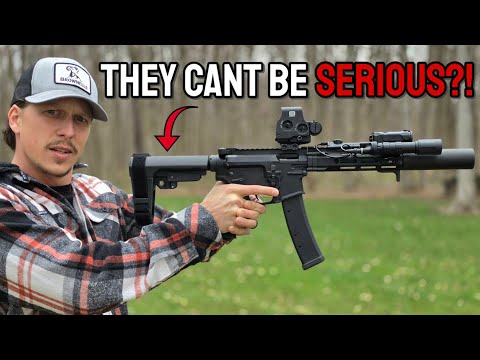
History/Evolution of Pistol Braces and How We Screwed It Up!

Published on January 31, 2023
Duration: 9:40

This video details the historical evolution of pistol braces, contrasting early designs intended for forearm stabilization with modern iterations that increasingly resemble rifle stocks. It explains how features like collapsibility and adjustable length of pull led to ATF reclassifications, shifting the focus from a stabilizing accessory to a component that could function as a stock, thereby impacting legal definitions under the NFA.

Quick Summary

Pistol braces have evolved significantly from early rubber sleeves for forearm stabilization to modern collapsible and extendable designs that function like rifle stocks. This evolution, particularly concerning adjustable length of pull, prompted the ATF to reclassify many braces as stocks, impacting firearm legality.

Chapters

  1. 00:00Introduction: Pistol Brace Fatigue
  2. 00:39The Question: Why Are Braces Different Now?
  3. 00:53History: The First Stabilizing Braces
  4. 01:38Original Brace Design & Use
  5. 02:06Limitations for Disabled Shooters
  6. 02:34Stock vs. Brace for Disabled Individuals
  7. 03:23Evolution: Braces for Non-AR Platforms
  8. 03:54Key Change: Collapsible and Extendable Braces
  9. 04:18Braces Evolving into Stock-Like Designs
  10. 04:44Modern Braces Resembling Stocks
  11. 04:50Length of Pull Becomes an Issue
  12. 05:00Foldable and Stock-Like Braces
  13. 05:29Clearly a Stock: The Velcro Distinction
  14. 05:47Comparing Original vs. Modern Braces
  15. 06:16Illustration: Length of Pull Explained
  16. 06:34Massive Difference in Overall Length
  17. 07:23ATF's Original Ruling on LOP
  18. 07:37Industry Response and Design Changes
  19. 08:04Public Use and ATF's Reaction
  20. 08:20Original Intent vs. Current Reality
  21. 08:47Modern Braces as Stocks
  22. 09:01Reason for ATF's Evolving Opinion
  23. 09:21Who to Blame: Ourselves and Manufacturers

Frequently Asked Questions

How did early pistol braces differ from modern ones?

Early pistol braces were simple rubber sleeves that slipped over buffer tubes, designed for forearm stabilization with Velcro straps. Modern braces have evolved to be collapsible, extendable, and often feature stock-like designs with adjustable length of pull, making them functionally different.

What led to the ATF reclassifying pistol braces?

The ATF's reclassification was driven by the evolution of pistol braces. As they became collapsible, extendable, and visually/functionally similar to rifle stocks, particularly regarding length of pull, the ATF began treating them as such, requiring compliance with NFA regulations.

What is 'length of pull' and why is it important for pistol braces?

Length of pull (LOP) is the distance from the rear of the stock to the trigger. For pistol braces, an adjustable or extended LOP, similar to that of a rifle, became a key factor in the ATF's determination that the brace was functioning as a stock.

Who is responsible for the current pistol brace situation?

The speaker suggests that blame lies not solely with the ATF, but also with the manufacturers who designed increasingly stock-like braces and individuals who used them in ways that demonstrated their stock-like functionality, such as shouldering them in videos.

Related News

All News →

More 2nd Amendment & Law Videos You Might Like

More from TheYankeeMarshal

View all →