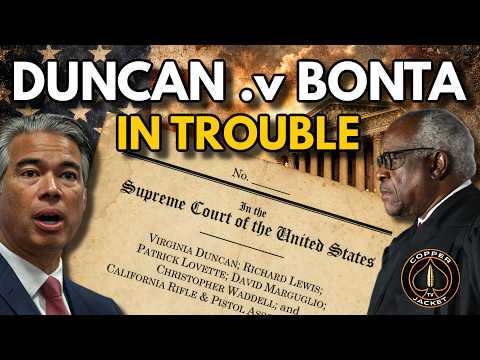
Is 2025 the Year Non-Violent Criminals Get Their Gun Rights?

Published on January 7, 2025
Duration: 14:51

This video discusses the ongoing legal battles surrounding firearm rights for individuals convicted of non-violent offenses. It highlights the case of Brian Range in Pennsylvania, where the Third Circuit ruled that a person convicted of a non-violent misdemeanor without incarceration cannot be deprived of their Second Amendment rights. The discussion also references the US v. Duarte case from the Ninth Circuit concerning non-violent felony charges, emphasizing the distinction between violent and non-violent offenders in Second Amendment jurisprudence and the potential for these cases to reach the Supreme Court.

Quick Summary

The Third Circuit Court of Appeals ruled that individuals convicted of non-violent misdemeanors without incarceration retain their Second Amendment rights. This ruling, alongside cases like US v. Duarte concerning non-violent felonies, contributes to a circuit split that may lead the Supreme Court to clarify who is entitled to firearm rights.

Chapters

  1. 00:00Introduction: Trend of Lawsuits on Non-Violent Offenses
  2. 00:21Pennsylvania Case: Brian Range and Food Stamp Fraud
  3. 01:14Third Circuit Ruling on Non-Violent Misdemeanors
  4. 01:45Case Sent to US Supreme Court Due to Circuit Split
  5. 02:18US v. Duarte Case and Non-Violent Felony Charges
  6. 03:00Three Categories of Second Amendment Cases
  7. 03:20The 'Who' Cases: Disarming Non-Violent Offenders
  8. 06:10Argumentation: 'Part of the People' and Historical Tradition
  9. 07:07Brian Range's Case: Non-Violent Offense and Clean Record
  10. 08:13Circuit Court Rulings on Felon Disarmament
  11. 09:41California as an Exporter of Legal Decisions
  12. 10:58Optimism for 2025: Legal Landscape and Supreme Court Cases
  13. 12:16Supreme Court's Conference on Gun Cases (Snow, Jennings)
  14. 13:01The Need to Define Second Amendment Protections for Firearms
  15. 14:18Call to Action: Support Second Amendment Litigation

Frequently Asked Questions

What is the significance of the Brian Range case for Second Amendment rights?

The Brian Range case, involving a non-violent misdemeanor conviction, led to a Third Circuit ruling that individuals without incarceration for such offenses cannot be permanently deprived of their Second Amendment rights. This case is significant as it contributes to a circuit split and is being considered by the US Supreme Court.

How do courts distinguish between violent and non-violent offenders regarding firearm rights?

Courts analyze whether an individual is part of 'the people' and if there's historical tradition supporting disarming them for their specific actions. Violence and dangerousness are key factors; the argument for restoring rights focuses on whether non-violent offenses should lead to permanent disarmament.

What is the 'who' category in Second Amendment litigation?

The 'who' category in Second Amendment litigation refers to cases that determine which individuals are entitled to Second Amendment rights. This contrasts with 'hardware' cases (e.g., magazine bans) and 'wear' cases (e.g., sensitive places for carrying firearms).

What is the potential impact of the US v. Duarte case?

The US v. Duarte case, which ruled that Second Amendment rights should not be taken away from individuals convicted of non-violent felony charges, has created a circuit split. This split increases the likelihood that the Supreme Court will take up the issue to provide a definitive ruling.

Related News

All News →

More 2nd Amendment & Law Videos You Might Like

More from CRPA TV

View all →