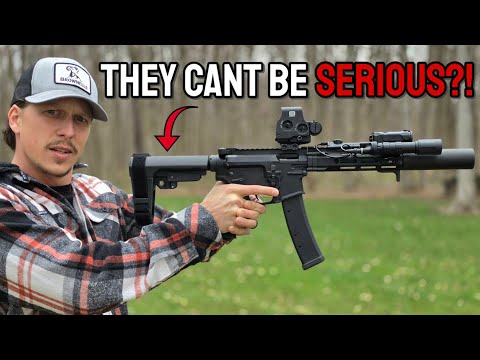
Just Put a Stock on It (ATF & Pistol Brace Ruling)

Published on January 27, 2023
Duration: 24:41

This video provides an expert-level breakdown of the ATF's complex and evolving regulations surrounding pistol braces. It details the history of these accessories, the ATF's shifting interpretations, and the current mandates for owners. The speaker, demonstrating deep knowledge of NFA law and firearm mechanics, outlines the three primary compliance paths available to gun owners, emphasizing the constitutional implications of these federal mandates.

Quick Summary

The ATF's current ruling on pistol braces mandates that owners must either register their firearm as an SBR with a tax stamp waiver, destroy the brace, replace the barrel with a 16-inch version, or surrender the firearm to comply with regulations.

Chapters

  1. 00:00Pistol Brace Shooting Demonstration
  2. 00:45History of Pistol Braces
  3. 01:40Clarifying Pistol Brace Intent
  4. 02:55Brace vs. Stock Comparison
  5. 03:57The ATF's Regulatory Shift
  6. 05:49Evolution of ATF Rulings
  7. 10:07Current NFA Amnesty and Registration
  8. 13:00Response Strategies for Owners

Frequently Asked Questions

What is the ATF's current stance on pistol braces?

The ATF's latest ruling requires owners of firearms equipped with pistol braces to register them as Short-Barreled Rifles (SBRs) with a tax stamp waiver, destroy the brace, replace the barrel with a 16-inch version, or surrender the firearm.

How did pistol braces become popular?

Pistol braces emerged around 2010-2012, allowing for the use of shorter-barreled firearms that would otherwise be classified as NFA-regulated SBRs, providing greater maneuverability and stability.

What are the compliance options for owners of braced pistols?

Owners can choose to register their firearm as an SBR (with a tax stamp waiver), destroy the brace, install a 16-inch barrel, or turn in the firearm to comply with the ATF's ruling.

What is the difference between a pistol brace and a rifle stock?

A pistol brace is designed to wrap around the forearm for stability during one-handed shooting of heavy pistols, while a rifle stock is intended to be shouldered for two-handed shooting stability.

Related News

All News →

More 2nd Amendment & Law Videos You Might Like

More from TA Targets

View all →