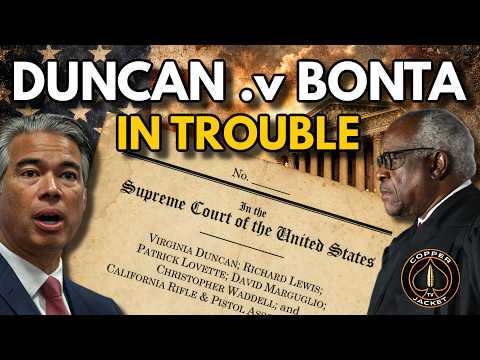
Supreme Court Issues 9-0 Unanimous Decision Changing Second Amendment & 4th Amendment Fight!

Published on August 15, 2025
Duration: 9:47

This video discusses the Supreme Court case *Case v. Montana*, which examines the boundaries of warrantless home entry by law enforcement. It builds upon the unanimous 9-0 ruling in *Kietig v. Strong*, focusing on whether probable cause is required for emergency aid exceptions to the warrant requirement. The case highlights the tension between protecting individual rights and law enforcement's ability to respond to potential emergencies.

Quick Summary

The Supreme Court case *Case v. Montana* will determine if law enforcement requires probable cause for warrantless home entry under emergency aid exceptions, building on the *Kietig v. Strong* precedent. This case could significantly impact Fourth Amendment protections against unreasonable searches and seizures.

Chapters

  1. 00:00Supreme Court Case Review
  2. 00:19Sponsor: First Form
  3. 00:50Case v. Montana Overview
  4. 01:33Facts of the Case
  5. 03:43Legal Arguments & Lower Court Decisions
  6. 05:30Background: Kietig v. Strong Case
  7. 06:47GOA's Argument in Case v. Montana
  8. 08:06Impact on Individual Rights
  9. 08:34Oral Arguments & Future Outlook
  10. 09:04Support the Channel

Frequently Asked Questions

What is the significance of the Supreme Court case *Case v. Montana*?

*Case v. Montana* is significant because it will clarify or expand upon the Supreme Court's 2021 ruling in *Kietig v. Strong*, addressing the extent to which law enforcement can enter a home without a warrant under emergency aid exceptions, impacting Fourth Amendment protections.

What legal precedent does *Case v. Montana* build upon?

*Case v. Montana* builds upon the Supreme Court's unanimous 9-0 decision in *Kietig v. Strong* (2021), which limited the use of the community caretaking doctrine as a justification for warrantless home entry and firearm seizure.

What is the core legal question in *Case v. Montana*?

The core legal question is whether law enforcement needs probable cause to believe an emergency is occurring before entering a home without a warrant, or if a lesser standard like reasonable suspicion is sufficient under the emergency aid exception.

What arguments are being made in *Case v. Montana*?

Trevor Casease argues that officers lacked probable cause for warrantless entry, and that the Montana Supreme Court erred by applying a community caretaking test requiring only reasonable suspicion, contrary to *Kietig v. Strong*.

Related News

All News →

More 2nd Amendment & Law Videos You Might Like

More from Armed Scholar

View all →