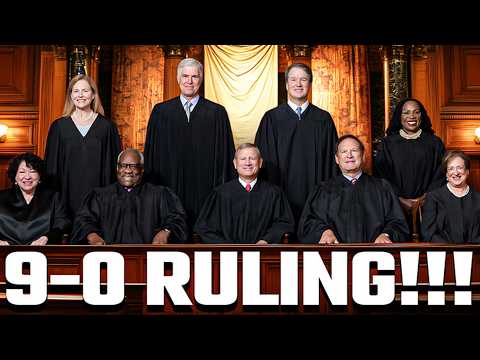
Supreme Court Issues 9-0 Unanimous Decision With Major Nationwide & Constitutional Implications!

Published on April 8, 2026
Duration: 9:07

This video analyzes a 9-0 Supreme Court decision impacting government immunity in cases of law enforcement error, specifically a wrong-house FBI raid. The Supreme Court ruled that law enforcement does not automatically gain immunity simply by exercising judgment, requiring them to demonstrate policy considerations rather than mere mistakes. The case has returned to the 11th Circuit, where judges are scrutinizing the line between policy discretion and operational failures, questioning how executing a warrant at the wrong address could be a protected policy decision. The outcome could significantly affect the ability to sue the government for operational errors.


Quick Summary

The Supreme Court issued a 9-0 unanimous decision stating that law enforcement does not automatically get immunity for exercising judgment during operations. The government must prove decisions were based on policy considerations, not just mistakes, impacting cases like wrong-house raids.

Chapters

  1. 00:00Introduction: Wrong House Raid Scenario
  2. 01:08The Martin Family's Experience
  3. 02:20Lawsuit and Government Defense
  4. 02:42Supreme Court's Unanimous Decision
  5. 03:0811th Circuit Rehearing Arguments
  6. 03:18Key Questions for the Government
  7. 04:22Focus on Supreme Court's Ruling
  8. 04:39Update on Additional Briefing
  9. 05:36Government's Continued Defense
  10. 06:29Plaintiffs' Argument
  11. 06:51Consequences of Government Victory
  12. 07:13Likely Paths Forward for the Case
  13. 08:07Government's Weakened Position
  14. 08:16Accelerated Timeline for Decision
  15. 08:19Case at a Critical Point

Frequently Asked Questions

What was the Supreme Court's 9-0 decision regarding law enforcement raids?

The Supreme Court ruled that law enforcement agencies do not automatically gain immunity for actions taken under the discretionary function exception of the Federal Tort Claims Act. They must demonstrate that decisions were based on policy considerations, not merely mistakes.

What is the Federal Tort Claims Act (FTCA) and its discretionary function exception?

The FTCA allows lawsuits against the U.S. government for torts by federal employees. The discretionary function exception shields the government from liability for actions involving judgment or choice, especially those rooted in policy.

What is the main issue being debated in the 11th Circuit regarding the FBI raid case?

The 11th Circuit is focused on distinguishing between protected policy discretion and basic operational failures. Judges are questioning how executing a warrant at the wrong address could be considered a policy decision shielded by immunity.

What are the potential consequences if the government wins the current legal battle?

If the government prevails, it could mean that wrong-house raids are almost always immune from lawsuits, significantly expanding government immunity beyond current legal precedents and limiting accountability for law enforcement errors.

Related News

All News →

More 2nd Amendment & Law Videos You Might Like

More from Armed Scholar

View all →