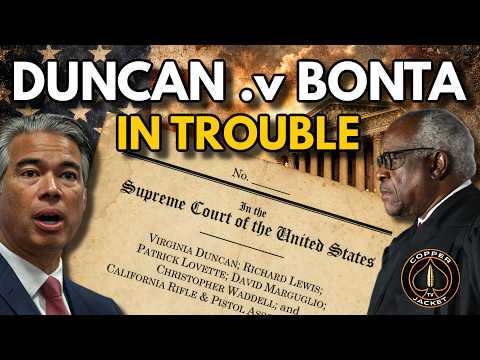
THE HIDDEN SCOTUS FIGHT BEHIND YESTERDAY'S 2A DECISION?

Published on October 16, 2024
Duration: 19:14

This video analyzes the US Supreme Court's decision in Laura v. Pennsylvania, vacating and remanding the case concerning Second Amendment rights for 18-20 year olds. The speaker, Mark Smith, a constitutional attorney, explores potential internal Supreme Court debates regarding the historical period for interpreting Second Amendment rights (1791 vs. 1868) and the doctrine of incorporation through the 14th Amendment's Privileges or Immunities Clause versus Substantive Due Process. The discussion highlights how these legal intricacies might influence future Second Amendment cases, particularly contrasting the Laura case with the federal Reese case.

Quick Summary

The Supreme Court vacated and remanded the Laura v. Pennsylvania case, which addressed Second Amendment rights for 18-20 year olds. This action, influenced by the Rahimi decision, highlights ongoing debates within the Court regarding the historical period for interpreting Second Amendment rights and the legal mechanisms of the 14th Amendment's incorporation doctrine.

Chapters

  1. 00:00Intro: SCOTUS Vacates Laura v. Pennsylvania
  2. 01:05Speaker Introduction: Mark Smith
  3. 01:26Laura v. Pennsylvania Case Details
  4. 02:33Third Circuit Ruling on Second Amendment Rights
  5. 02:50Historical Context: Militia Act of 1792
  6. 03:3626th Amendment and Other Rights of Young Adults
  7. 04:22Supreme Court Grants Certiorari, Vacates, Remands
  8. 04:30Impact of Rahimi Decision
  9. 05:12Possible Reasons for SCOTUS's Decision
  10. 05:35SCOTUS's Interest in Second Amendment Cases
  11. 06:01Bianco v. Snope Case (AR-15 Ban)
  12. 07:34The Geeky Part: Historical Analog Time Period
  13. 08:21Tension: Justice Thomas and Incorporation
  14. 09:38Incorporation via 14th Amendment Clauses
  15. 11:01Why 19th Century is Bad for 2A Movement
  16. 13:23Reese Case vs. Laura Case
  17. 14:11Super Geeky: 1791 vs. 1868 in Reese Case
  18. 15:32Avoiding the 14th Amendment Fight
  19. 16:38The Worth Case (Minnesota)
  20. 17:18Distinguishing Laura from Worth
  21. 18:11Intramural Fight Among Justices
  22. 18:33Conclusion and Call to Action

Frequently Asked Questions

What was the Supreme Court's decision in Laura v. Pennsylvania regarding young adults' Second Amendment rights?

The Supreme Court granted certiorari, vacated the lower court's decision, and remanded the Laura v. Pennsylvania case. This case questioned whether 18, 19, and 20-year-olds have the same right to keep and bear arms as other adults, especially concerning carrying firearms outside the home during declared emergencies in Pennsylvania.

What is the significance of the 1791 vs. 1868 historical analog debate in Second Amendment law?

The debate centers on whether historical laws used to interpret the Second Amendment should be from 1791 (when it was ratified) or 1868 (when the 14th Amendment was adopted). Looking to 1868 could incorporate late 19th-century anti-gun laws, potentially undermining modern Second Amendment protections.

How does Justice Clarence Thomas's view on the 14th Amendment differ from the Supreme Court's typical approach?

Justice Thomas believes the 14th Amendment's Privileges or Immunities Clause, not the Substantive Due Process Clause, is the correct vehicle for incorporating the Bill of Rights against states. This is a departure from the Court's long-standing precedent which uses the Due Process Clause.

Why might the Supreme Court prefer to hear the Reese v. ATF case over Laura v. Pennsylvania?

The Reese case involves a federal statute, allowing the Court to focus solely on the Second Amendment's application to the federal government (requiring a 1791 analog). This avoids the complex 14th Amendment incorporation debate present in state law cases like Laura, potentially simplifying the legal path.

Related News

All News →

More 2nd Amendment & Law Videos You Might Like

More from The Four Boxes Diner

View all →