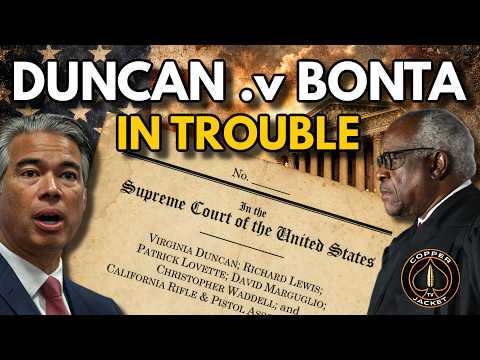
When the Supreme Court Forces You to Admit That Gun Control is Racist

Published on March 3, 2023
Duration: 7:43

This video, presented by William Kirk, President of Washington Gun Law, critically examines the historical underpinnings of gun control in the United States. Kirk argues that historical attempts to regulate firearms, often framed as measures against 'dangerous persons,' were fundamentally rooted in racism, citing numerous examples from colonial and antebellum periods targeting Black individuals and Native Americans. He contends that the Supreme Court's Bruen decision, which requires historical analogs for gun control laws, exposes this racist foundation, forcing gun control advocates to confront the origins of their arguments.

Quick Summary

Historical gun control measures in the United States were fundamentally rooted in racism, targeting specific racial groups like Black individuals and Native Americans. The Supreme Court's Bruen decision requires modern gun control laws to have historical parallels, forcing advocates to confront these racist origins when seeking precedents.

Chapters

  1. 00:00Introduction: Bruen Decision's Impact
  2. 01:02United States v. Rahimi Case Analysis
  3. 01:50Interpreting Bruen's Historical Test
  4. 02:37Historical Context of Domestic Violence Laws
  5. 03:12DOJ's Racially Charged Arguments
  6. 03:51The Racist Foundation of Gun Control
  7. 04:26Early Race-Based Gun Laws (Virginia, Louisiana)
  8. 05:04Further Historical Race-Based Gun Laws
  9. 05:31Additional Race-Based Gun Laws (Texas, NC, MS)
  10. 05:471792 Militia Act & Exclusion
  11. 05:57Conclusion: Gun Control's Racist Origins
  12. 06:50Call to Action & Legal Disclaimer

Frequently Asked Questions

What is the main argument regarding the history of gun control in the US?

The video argues that historical gun control measures in the United States were fundamentally rooted in racism, targeting specific racial groups like Black individuals and Native Americans, rather than solely focusing on public safety.

How does the Supreme Court's Bruen decision relate to gun control history?

The Bruen decision requires modern gun control laws to have historical parallels. This requirement forces gun control advocates to confront the racist origins of many historical firearm regulations when seeking precedents.

What historical examples are cited to support the claim of racist gun control?

Examples include race-based total gun bans in Virginia (1640s, 1712), complete bans for slaves in Louisiana (1806, 1811), master's permission for slaves in South Carolina (1819), and bans for free Black individuals in Maryland (1831) and Georgia (1833).

What was the DOJ's argument in the Rahimi case regarding historical gun laws?

In the Rahimi case, the DOJ cited historical laws disarming groups like enslaved people, Native Americans, and British loyalists to justify firearm restrictions for domestic abusers, arguments described as 'repugnant' but historically present.

Related News

All News →

More 2nd Amendment & Law Videos You Might Like

More from Washington Gun Law

View all →