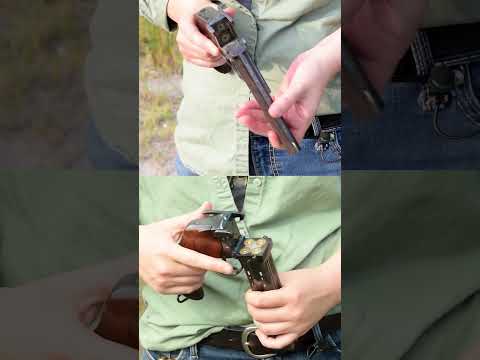
History of WWI Primer 090: Austro-Hungarian Werndl Documentary

Published on December 18, 2018
Duration: 74:42

This video details the history and technical aspects of the Austro-Hungarian Werndl 1867 rifle, a significant firearm produced by the world's largest arms manufacturer before WWI. It covers the rifle's development, its innovative rotating breech mechanism, and its eventual adoption and service, highlighting its role as a precursor to modern firearms despite its single-shot, black-powder nature.

Quick Summary

The Werndl 1867 rifle, nicknamed the 'tabernacle rifle,' was an Austro-Hungarian single-shot firearm featuring an innovative rotating breech mechanism. It chambered the 11x58mm Werndl cartridge and was known for its robust construction, though its heavy trigger pull and single-shot capacity made it slower than later repeating arms.

Chapters

  1. 00:00Introduction to the Werndl 1867
  2. 00:56Origins of the Werndl Arms Manufacturer
  3. 01:16Leopold Werndl and Early Innovations
  4. 02:31Joseph Werndl's Vision and US Experience
  5. 08:01Carl Holub and the Tabernacle Rifle Concept
  6. 11:11Financial Struggles and New Factory
  7. 12:12Impact of the Austro-Prussian War
  8. 14:15Adoption of the Remington Rolling Block
  9. 15:13The Werndl-Holub Conversion and Rifle
  10. 16:16Werndl-Holub Rifle Trials and Adoption
  11. 19:45Detailed Look at the Werndl 1867 Rifle
  12. 24:37Werndl 1867 Accessories and Cartridge
  13. 25:41Werndl 1867 Action Mechanics
  14. 27:08Live Firing Demonstration
  15. 29:09Production of the Werndl 1867 Series
  16. 30:02Carbines and Extra Core Variants
  17. 31:51Company Restructuring and Growth
  18. 34:43OEWG Becomes Largest Arms Manufacturer
  19. 35:44Werndl's Role in WWI
  20. 36:21The Werndl Model 1873/77
  21. 37:28Comparing 1867 and 1873/77 Models
  22. 40:46Action and Trigger Improvements
  23. 42:17Cartridge and Bayonet Updates
  24. 43:40Werndl 1873/77 Carbine
  25. 47:35Production Figures and Later Cartridges
  26. 48:22The 1877 Improved Cartridge
  27. 49:47Carbine Cartridge Updates
  28. 50:30Werndl Rifles in WWI Service
  29. 51:30Werndl 1867 in WWI Inventory
  30. 53:03WWI Bayonets and Conversions
  31. 53:25Werndl Rifles as Signal Launchers
  32. 53:38Historical Context of Obsolete Firearms in WWI
  33. 53:44Personal Lives of Joseph Werndl and Carl Holub
  34. 55:17Joseph Werndl's Legacy and Philanthropy
  35. 56:46Conclusion: Werndl's Impact on Firearms History
  36. 57:54May's Ergonomic Review of the Werndl 1867
  37. 60:09The 'Tabernacle' Breech Mechanism
  38. 60:37Shooting Impressions: Loading and Trigger
  39. 63:55Comparison to Other Single-Shot Rifles
  40. 67:18May's Review of the Werndl 1873/77
  41. 69:01Carbine Action and Trigger Improvements
  42. 71:11Carbine vs. Rifle Choice for Combat
  43. 72:09Final Thoughts on the Werndl Rifle

Frequently Asked Questions

What is the Werndl 1867 rifle and why is it significant?

The Werndl 1867 rifle, also known as the 'tabernacle rifle,' was a single-shot, black-powder firearm developed in Austria-Hungary. It's significant for its innovative rotating breech mechanism and its role in the development of the Werndl arms manufacturing company, which became a major global producer.

What caliber does the Werndl 1867 rifle use?

The Werndl 1867 rifle chambers the 11x58mm Werndl cartridge, a metallic cartridge designed for black powder propellant. This was a significant advancement over earlier muzzle-loading firearms.

What were the key features of the Werndl 1867 rifle's action?

The rifle's most distinctive feature was its rotating breech, which allowed for relatively quick loading compared to muzzleloaders. The action could only be opened at half-cock, and the hammer served to seal the breech after firing, enhancing safety.

How did the Werndl 1867 rifle compare to other firearms of its era?

While a significant step forward from muzzleloaders, the Werndl 1867's single-shot nature and heavy trigger pull made it slower to operate than later repeating firearms. However, its robust construction and innovative breech were considered advanced for its time.

More General Videos You Might Like

More from C&Rsenal

View all →