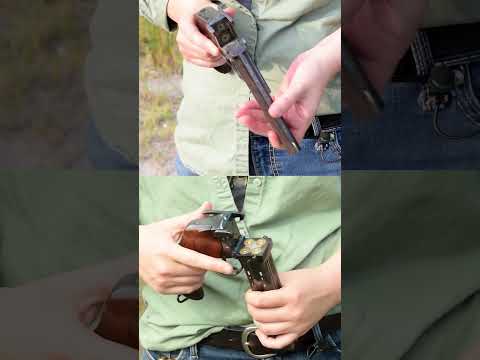
History of WWI Primer 141: Swiss Mannlicher 1893 Documentary

Published on June 22, 2021
Duration: 61:36

This video details the history and technical aspects of the Swiss Mannlicher 1893 carbine. It covers its development as a response to issues with the Schmidt-Rubin 1889 rifle, focusing on the Mannlicher action's design, including its front locking lugs and detachable magazine. The video provides a comprehensive guide to disassembling and reassembling the bolt, highlighting potential complexities and common issues encountered by users, such as the bolt potentially coming out of battery or the magazine becoming loose.

Quick Summary

The Swiss Mannlicher 1893 carbine, developed to improve upon the Schmidt-Rubin 1889, features a more compact bolt with front locking lugs. However, it can experience issues like the bolt ejecting during rapid cycling and the magazine becoming loose under recoil, making its operation complex and potentially problematic.

Chapters

  1. 00:08Introduction: Swiss Mannlicher 1893
  2. 00:24Overview of the Carbine Model 1893
  3. 00:36Initial Impressions and Specifications
  4. 00:51Magazine and Cartridge Details
  5. 01:19Context: The Forgotten Stepchild of Swiss Rifles
  6. 01:28Problems with the Swiss Schmidt-Rubin 1889
  7. 02:00Receiver Length and Weight Issues of the 1889
  8. 02:37Bolt Comparison: Vetterli vs. Schmidt-Rubin
  9. 03:03Rear Locking Lugs and Receiver Length
  10. 04:00Black Powder Design Considerations
  11. 04:30Long Action and Balance Issues
  12. 04:58Need for Carbines and Cavalry Weapons
  13. 05:33Development of Carbine Trials
  14. 06:03Ulrich Wille's Influence and Cavalry Reforms
  15. 06:45Technical Rifle Commission Decisions
  16. 07:17Comparison to Mannlicher 1886 Family
  17. 08:18Mannlicher 1890 Design Evolution
  18. 09:11Mannlicher's 1890 Design: Front Locking Lugs
  19. 09:31Adoption as Repeating Carbine Model 1893
  20. 10:42Comparing Austrian 1890 and Swiss 1889
  21. 10:58Austrian 1890 Cavalry Carbine
  22. 11:44Swiss Mannlicher 1893 - Detailed Examination
  23. 12:04Butt Plate and Sling Swivel
  24. 12:16Stock and Grip Design
  25. 12:31Front Sight and Barrel Band
  26. 12:57Lower Barrel Band and Sling Loop
  27. 13:08Full Handguard vs. Austrian Version
  28. 13:13Quadrant Rear Sight Details
  29. 13:59Detachable Magazine Mechanism
  30. 14:51Charger Loading System
  31. 15:16Bolt Stop / Bullet Release
  32. 15:57Bolt Comparison: 1890 vs. 1893
  33. 16:12Safety Mechanism Operation
  34. 16:25Separate Bolt Head and Helical Grooves
  35. 16:51Receiver Design and Pressure Containment
  36. 17:48Mannlicher Bolt Mechanism Animation
  37. 18:00Loading and Locking the Bolt
  38. 18:21Unlocking and Cycling the Bolt
  39. 18:32Cocking and Firing Mechanism
  40. 18:57Safety Lever Functionality
  41. 19:12Sear Assembly and Trigger System
  42. 20:00Ejector Mechanism
  43. 20:12Extractor Functionality
  44. 22:00Production History: SIG and Waffenfabrik Bern
  45. 23:15Export and Issue of the 1893
  46. 23:30Short Service Life and Complaints
  47. 23:46Bolt Disassembly and Reassembly Challenges
  48. 25:16Annoyances with the Mannlicher Bolt
  49. 25:35Bolt Release and Decocking Issues
  50. 26:20Tips for Bolt Reassembly
  51. 27:06Decocking the Bolt
  52. 27:44Full Bolt Disassembly
  53. 28:20Reassembly Challenges and Alignment
  54. 31:39Complexity of Bolt Reassembly
  55. 33:33Armorer Level Issues and Factory Returns
  56. 34:17Evolution to the Schmidt Action (1896, 1905)
  57. 34:48Later Service and Privatization
  58. 34:55P Codes and Inventory Dates
  59. 35:31Unique Firearm Status
  60. 35:51Mae's Opinion: Carbine vs. Short Rifle
  61. 36:11Weight and Length Perception
  62. 36:41Comparison with K11 and 1905 Carbine
  63. 38:10Comparison with Austrian 1890 Mannlicher
  64. 38:28Cocking Piece Differences
  65. 39:03Stock Ergonomics and Grip Preferences
  66. 39:35Trigger Guard Condition
  67. 40:56Action Smoothness and Cycling
  68. 41:06Operating Straight Pulls from the Shoulder
  69. 41:30Filming Conditions: Charleston Heat
  70. 41:47Rate of Fire and Inspection
  71. 42:23Bolt Ejection Problem
  72. 43:35Lever Action Hybridization for Filming
  73. 44:08Shooting the Mannlicher 1893
  74. 44:11Charger Loading Experience
  75. 44:49Sight System Analysis
  76. 46:59A Thinking Man's Carbine
  77. 47:06Trigger Pull Assessment
  78. 48:24Recoil and Handling
  79. 49:10Safety Lever Operation
  80. 50:00Cycling the Bolt: The Ejection Issue
  81. 51:11Reasons for Bolt Ejection
  82. 53:36Bolt Stop Bouncing and Ejection
  83. 54:35Potential Fault: Bolt Release Mechanism
  84. 55:34Magazine Shot Loose Issue
  85. 56:32Final Verdict: Swiss vs. Mannlicher
  86. 56:58Theoretical Vulnerabilities: Rust and Cold Weather
  87. 57:39Evolutionary Advantages Over the 1893
  88. 58:06Schrodinger's Yes or No
  89. 59:19Personal Experience vs. Logic
  90. 1:00:01Bitterness and Collection Economics
  91. 1:01:18Project Update

Frequently Asked Questions

What are the main issues with the Swiss Mannlicher 1893 carbine?

The Swiss Mannlicher 1893 can suffer from the bolt ejecting from the receiver during rapid cycling, and its detachable magazine can become loose due to recoil. Disassembly and reassembly of the bolt can also be complex and frustrating for users.

How does the Mannlicher 1893's bolt design differ from the Schmidt-Rubin 1889?

The Mannlicher 1893 features a more compact bolt with front locking lugs, allowing for a shorter and lighter receiver. In contrast, the Schmidt-Rubin 1889 used a bolt design derived from the Vetterli rifle with rear locking lugs, resulting in a longer and heavier action.

What ammunition does the Swiss Mannlicher 1893 use?

The Swiss Mannlicher 1893 is chambered for the 7.5x53mm GP90 cartridge. This is a rimless, bottlenecked round featuring a round-nosed bullet, often with a paper patch.

What are the ergonomic drawbacks of the Mannlicher 1893?

The safety lever on the Mannlicher 1893 is noted as being stiff and requiring the shooter to break their firing grip to operate. This design is considered less than ideal for combat situations where quick and intuitive safety manipulation is crucial.

More General Videos You Might Like

More from C&Rsenal

View all →