History of WWI Primer 184: Domestic 1911s Documentary

Published on September 19, 2023
Duration: 57:07

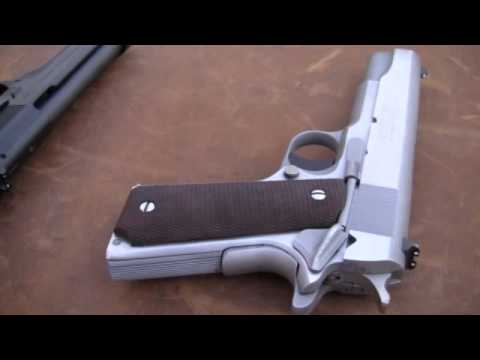
This documentary delves into the domestic production of the Colt Model 1911 pistol, focusing on Springfield Armory and Remington UMC's roles during World War I. It details the manufacturing processes, contractual agreements, and the technical differences between pistols produced by various manufacturers, highlighting the challenges of achieving parts interchangeability and the impact of wartime demands on production.

Quick Summary

Springfield Armory produced M1911 pistols for the US government under a licensing agreement with Colt, aiming for 100% parts interchangeability. While functionally similar, Springfield models featured distinct finishes and markings compared to Colts, and their production was integrated with rifle manufacturing, presenting unique logistical challenges.

Chapters

  1. 00:20Introduction: Springfield M1911
  2. 01:00Sponsor Message: Ballistol & Channel Support
  3. 02:11M1911 Development Series Overview
  4. 02:36M1911 Adoption & Colt Contract Terms
  5. 03:43Springfield Armory: History & Role
  6. 04:26Government M1911 Manufacturing Strategy
  7. 05:21Springfield Production Cost & Timeline
  8. 06:03Springfield Receives Reference Models
  9. 06:32Springfield M1911 Production Order
  10. 07:18Springfield Production Delays & Reasons
  11. 07:45Springfield's First M1911s & Approval
  12. 08:13Springfield M1911 Design Goals & Differences
  13. 08:44Markings and Finish: Springfield vs. Colt
  14. 10:10Minor Technical Differences: Sights & Safeties
  15. 10:42Hammers and Grip Undercuts
  16. 11:13Grip Checkering Differences
  17. 11:24Magazine Construction: Springfield vs. Colt
  18. 11:55Internal Operation & Interchangeability
  19. 13:16Cost of Springfield M1911 Production
  20. 13:28Changes During Springfield's Production
  21. 13:57WWI Context & Springfield's Limited Role
  22. 14:13US Army Expansion & Handgun Needs
  23. 15:05Springfield Pistol Production Suspended
  24. 15:33Ordnance Solutions for Handgun Shortage
  25. 16:02Other Manufacturers: Remington UMC
  26. 16:34John Douglas Patterson's Contributions
  27. 17:33Patterson's .45 Caliber Handgun Design
  28. 18:02Remington UMC M1911 Contract
  29. 18:14Remington's Production Challenges (Russian Rifles)
  30. 18:36Colt Technical Support for Remington
  31. 18:53Remington's M1911 Drawings & Tolerances
  32. 19:28Remington's Grip Plate Checkering Issue
  33. 19:51Growing Need for Pistols During WWI
  34. 20:43Remington UMC Contract Revision
  35. 21:08Winchester Repeating Arms Contract
  36. 21:55Winchester's Interchangeability Proposal
  37. 22:13Production Status: Colt, Remington, Winchester
  38. 22:25War Industries Board Restrictions
  39. 22:44AJ Savage Contract
  40. 23:02Dominion Rifle Factory & North American Arms
  41. 23:24National Cash Register Company Contract
  42. 23:37Karen Brothers Contract
  43. 23:56Remington UMC Begins Shipping
  44. 24:25Remington UMC M1911 Overview
  45. 25:16Remington M1911 Markings & Logos
  46. 26:26Remington M1911 Serrations & Finish
  47. 27:21Remington Magazines vs. Colt
  48. 29:29Remington M1911 Serial Numbering
  49. 29:43Desperate Measures: Civilian Pistol Appropriation
  50. 31:00Winchester Contract Reduction & NCR Increase
  51. 31:09Winchester Plant Inspection (August 1918)
  52. 32:06Lanston Monotype Company Contract
  53. 32:20Savage Arms Corporation Contract
  54. 32:30Burs Adding Machine Company Contract
  55. 32:47Interchangeability Issues: Remington UMC
  56. 33:16M1911 Manufacturers Meeting (Nov 1, 1918)
  57. 33:34Scale of M1911 Production Orders
  58. 34:06Armistice of Compiègne & Impact on Production
  59. 34:56Contract Suspensions Post-Armistice
  60. 35:35Remington UMC Order Suspension & Negotiation
  61. 35:58Springfield & Colt's Role in WWI
  62. 36:20Post-War M1911 Parts & Assembly
  63. 36:42Mystery Slide Analysis
  64. 39:05Comparing Colt, Springfield, and Remington M1911s
  65. 39:50Parts Interchangeability Test (Springfield vs. Colt)
  66. 41:07Finish Texture Differences (Springfield vs. Colt)
  67. 43:16Springfield M1911 Reliability Issues (6th Round Jam)
  68. 44:10Springfield Safety Malfunction
  69. 45:16M1911 Finickiness & Feed System Issues
  70. 45:59Springfield vs. Remington Reliability Comparison
  71. 47:06Trigger Feel Comparison (Remington vs. Springfield/Colt)
  72. 47:41Remington Magazine Fit in Colt vs. Remington
  73. 48:19Remington Front Serration Detail
  74. 49:16Trusting Springfield vs. Colt M1911s
  75. 50:02Trusting Remington UMC M1911s
  76. 50:34Final Impressions of M1911s
  77. 50:57Future Episodes: Foreign Service M1911s
  78. 51:39Special Thanks & Credits
  79. 54:43Archival Research & Depiction Challenges
  80. 55:56August Franctot Research Mystery
  81. 56:15Fake Shutters Discussion
  82. 56:491913 Rear Sight Improvement

Frequently Asked Questions

What were the main differences between Springfield and Colt M1911 pistols?

While designed for 100% parts interchangeability, Springfield M1911s differed from Colt models primarily in their finish (brush blue vs. blued) and markings, with Springfield replacing Colt's proprietary logos. Minor variations also existed in front sight integration and milling.

How did Remington UMC manufacture M1911 magazines differently?

Remington UMC magazines were constructed from sheet steel, formed, welded, and folded over the bottom plate. They were only blued on the lower half to avoid compromising the hardening of the feed lips, distinguishing them from Colt's magazine construction.

What challenges did Springfield Armory face in producing M1911 pistols?

Springfield Armory's M1911 production was integrated with its rifle line, meaning it could only produce one or the other at a time. Initial production was also delayed by the need to set up tooling and machines, and by competing government demands for other ordnance.

Why did the US government contract with multiple manufacturers for the M1911 during WWI?

The massive expansion of the US Army during WWI created an unprecedented demand for handguns. To meet this need, the government contracted with numerous companies like Remington UMC, Winchester, and National Cash Register, in addition to Colt and Springfield, to significantly increase production capacity.

Were Springfield M1911 pistols reliable?

While designed for interchangeability, the specific Springfield M1911 sample tested exhibited consistent jamming on the sixth round, highlighting the critical need for precise fitting and tolerances in the M1911 design. This suggests that not all examples may have performed flawlessly.

Related News

All News →

More General Videos You Might Like

More from C&Rsenal

View all →