Museum Tour Passing Dragonman's Recoiless Rifles

Published on June 7, 2023
Duration: 4:43

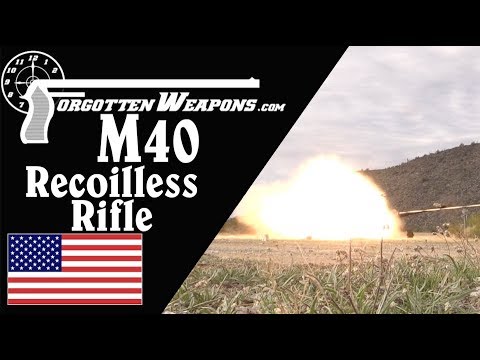
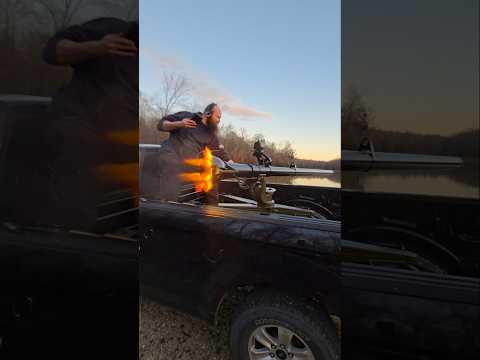
This video provides a museum-style tour of various military hardware, focusing on recoilless rifles and historical vehicles. The presenter details the origins and service history of the M40, M75, and M57 recoilless rifles, noting their use in major conflicts. Additionally, the tour covers a 1943 dog tag machine, a rare Tungsten Crane vehicle, and a scout car that led to the development of the half-track. The presenter emphasizes the destructive power of these weapons and the difficulty in legally owning them.

Quick Summary

Recoilless rifles like the M40, M75, and M57 were utilized in World War II, the Korean War, and the Vietnam War. Owning such powerful weapons requires a difficult-to-obtain destructive device permit, especially after 9/11.

Chapters

  1. 00:07Introduction to Recoilless Rifles
  2. 00:14M40, M75, and M57 Recoilless Rifles
  3. 00:30M40 on M38A1 Jeep (Korea)
  4. 00:41Vietnam Era Half-track Vehicle
  5. 00:49Spotting Rifle Function
  6. 00:57Destructive Device Permit Requirements
  7. 01:211943 Dog Tag Machine
  8. 01:34History of US Dog Tags (1916-1971)
  9. 01:56Dog Tag Notch Functionality
  10. 02:24Tungsten Crane Vehicle
  11. 02:49Rare Scout Car and Half-track Origin
  12. 03:19Half-track Front Roller Function

Frequently Asked Questions

What military conflicts saw the use of recoilless rifles like the M40, M75, and M57?

The M57 and M75 millimeter recoilless rifles were used throughout World War II, the Korean War, and the Vietnam War. The M40 recoilless rifle, designed in 1948, also saw service in the Korean and Vietnam Wars.

What is required to legally own a recoilless rifle in the United States?

Owning a recoilless rifle requires obtaining a destructive device permit. This permit is notoriously difficult to acquire, especially following the events of 9/11, as the government generally restricts public access to such powerful weaponry.

What was the purpose of the notch on 1936-era US dog tags?

The notch on 1936-era dog tags served a critical identification purpose. In the event of a soldier's death, the notch would be placed between their teeth, allowing for positive identification of the body by squad leaders or platoon sergeants.

How did the front roller on World War II half-tracks aid in combat?

The front roller on World War II half-tracks was designed to help the vehicle traverse difficult terrain, specifically enemy trenches. These trenches were typically 3.5 to 4.5 feet wide, and the roller allowed the half-track to bridge spans up to six feet, preventing it from falling in.

More General Videos You Might Like

More from Dragonman's

View all →