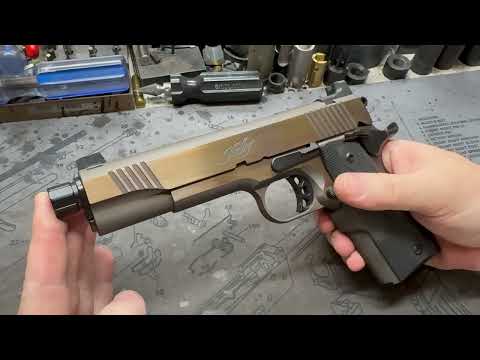
1911 vs. 1911A1

Published on November 21, 2025
Duration: 3:00

This guide details the key evolutionary differences between the original M1911 and the M1911A1 pistol, as presented by C&Rsenal. It covers ergonomic improvements like trigger reach, frame relief cuts, mainspring housing design, and grip safety modifications to prevent hammer bite. The guide also touches upon sight picture enhancements and WWII-era production changes, offering insights for firearm enthusiasts and historians.

Quick Summary

The M1911A1 evolved from the M1911 with key ergonomic improvements including a shortened trigger, frame relief cuts for better grip, an arched mainspring housing, and a lengthened grip safety to prevent hammer bite. Sight picture was also enhanced with squared-off front and wider rear notches for faster target acquisition. WWII production introduced Parkerized finishes and plastic grips.

Chapters

  1. 00:00Introduction: 1911 vs 1911A1
  2. 00:15Trigger and Frame Modifications
  3. 00:34Mainspring Housing Changes
  4. 01:00Grip Safety and Hammer Spur
  5. 01:46Sight Improvements
  6. 02:21WWII Production Expediencies

Frequently Asked Questions

What are the main ergonomic differences between the 1911 and 1911A1 pistols?

The 1911A1 features a shorter trigger for better reach and relief cuts (scallops) in the frame behind the trigger guard. It also has an arched, often serrated mainspring housing and a lengthened grip safety to prevent hammer bite, improving overall handling and comfort for various hand sizes.

How did the sights evolve from the 1911 to the 1911A1?

The original 1911 had a tapered front sight and a small V-notch rear sight. The 1911A1 updated this with a squared-off front sight and a wider, squared rear notch. This change significantly improved the sight picture, making it easier and faster to acquire targets.

What were some WWII production changes for the 1911A1?

During World War II, the M1911A1 saw production changes like localized hardening on the slide for increased durability. The finish transitioned from bluing to Parkerizing for better corrosion resistance, and wood grips were often replaced with reinforced plastic or resin grips.

Why was the grip safety lengthened on the 1911A1?

The grip safety was lengthened on the 1911A1 primarily to prevent 'hammer bite,' a common issue where the hammer would pinch the shooter's hand. This modification, along with other ergonomic changes, made the pistol more comfortable and practical for extended use.

Related News

All News →

More Gunsmithing & DIY Videos You Might Like

More from C&Rsenal

View all →