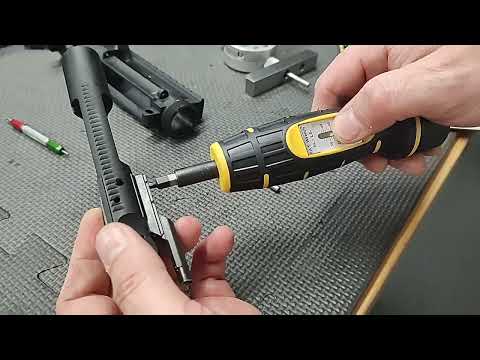
5 KAC Bolt Carrier Physicals & 1 LMT Enhanced Bolt Physical

Published on April 5, 2020
Duration: 33:20

This video provides an in-depth physical inspection and testing of five Knight's Armament Company (KAC) bolt carrier groups (BCGs) and one Lewis Machine & Tool (LMT) Enhanced Bolt. The instructor meticulously gauges various dimensions, checks for wear, and assesses the internal finishes of the carriers. The process includes replacing carrier keys and screws, performing torque tests, and highlighting the unique features of the LMT Enhanced Bolt, offering valuable insights for AR-15 owners and gunsmiths.

Quick Summary

The LMT Enhanced Bolt features a unique extractor with dual springs, a rounded ejector edge, and 'load balancing' cuts on the lugs to prevent stress failures. Older KAC bolt carriers may lack a logo and sometimes used YFS fasteners. Proper gas key dimensions are vital for gas efficiency, and a reverse braking torque test confirms secure carrier key installation.

Chapters

  1. 00:01Introduction and KAC BCGs
  2. 00:36Older KAC BCG with YFS Fasteners
  3. 01:08Optimized Carrier Key Screws
  4. 01:24LMT Enhanced Bolt Introduction
  5. 02:12LMT Enhanced Bolt Features
  6. 03:02Load Balancing Explained
  7. 03:53LMT Extractor Inspection
  8. 05:10Cam Pin and Retaining Pin Check
  9. 05:40Firing Pin Movement and Protrusion
  10. 06:24Magnetism Check
  11. 06:41Ejector Inspection
  12. 07:09Bolt Face and Finish
  13. 07:34Gas Ring and Headspace Test
  14. 08:35Firing Pin Hole Gauge
  15. 09:02Bolts That Don't Fail
  16. 09:51KAC Carrier Gauging
  17. 10:15Gas Key Dimensional Issues
  18. 12:06Gas Key Alignment
  19. 12:56Carrier Three Bores Inspection
  20. 13:11Carrier Key Blockage Check
  21. 13:54Three Bore Gauging (Bolt Shoulder/Support Run)
  22. 15:21Three Bore Gauging (Gas Ring Run)
  23. 16:16Three Bore Gauging (Bolt Tail)
  24. 18:37Borescope Inspection of Three Bores
  25. 25:53Reverse Torque Test Setup
  26. 26:11Carrier Length Check
  27. 27:55Reverse Braking Torque Test
  28. 32:40Conclusion and Summary

Frequently Asked Questions

What are the key features of the LMT Enhanced Bolt?

The LMT Enhanced Bolt distinguishes itself with a unique extractor design utilizing two smaller springs, a rounded ejector edge, and 'load balancing' cuts on the bolt lugs. These cuts are designed to redistribute stress, preventing the common failure of lugs breaking off under heavy use.

How can you identify older KAC bolt carriers?

Older Knight's Armament Company (KAC) bolt carriers might not have the prominent logo engraved on them. Some of these older variants were also produced with YFS fasteners for a short period, though KAC later discontinued their use due to industry concerns.

What is the significance of the gas key dimensions in a bolt carrier group?

The dimensions of the gas key are crucial for gas efficiency. If a gas key is slightly oversized, it can lead to less efficient gas cycling, particularly in firearms with lightly gassed systems. Gauging the gas key helps identify potential inefficiencies.

What is the purpose of the reverse braking torque test on a bolt carrier group?

The reverse braking torque test assesses the security of the carrier key installation. It measures how much force is required to loosen the carrier key screws. A high torque value indicates proper installation, staking, and the use of quality fasteners, ensuring the key won't come loose under operational stress.

More Gunsmithing & DIY Videos You Might Like

More from School of the American Rifle

View all →