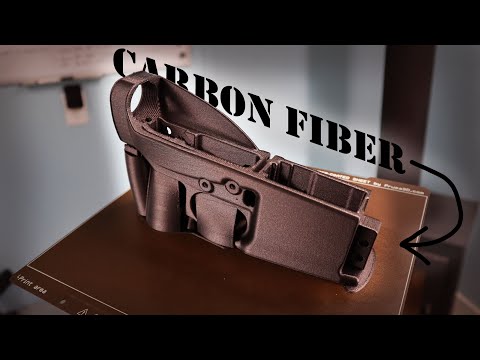
Annealing Nylon Prints To Solve Creep Issues | Does It Work?

Published on May 19, 2022
Duration: 17:36

This guide details the process of annealing nylon 3D prints to mitigate 'creep,' a phenomenon where the material slowly deforms under sustained stress below its yield point. The video demonstrates how to anneal parts using a filament dryer and then test their creep resistance under load. It highlights significant improvements in creep resistance, particularly with filled nylons, though it notes potential shrinkage during the annealing process.


Quick Summary

Annealing nylon 3D prints involves heating them to around 180-185°F (80-85°C) to improve their crystalline structure, which significantly reduces creep – the slow deformation under sustained stress. While annealing can cause shrinkage, it greatly enhances dimensional stability, especially in filled nylons, making parts more durable and reliable under load.

Chapters

  1. 00:00Introduction to Nylon Creep and Annealing
  2. 00:41Defining Creep in Plastics
  3. 01:45Examples of Creep in 3D Printed Parts
  4. 02:24What is Annealing?
  5. 02:56Annealing Method and Temperature
  6. 03:19Creep Testing Setup
  7. 03:72Testing Two Different Nylons
  8. 04:46Effect of Annealing on Dimensions (Shrinkage)
  9. 05:40Creep Test Results: Overtreezy Nylon
  10. 06:50Creep Test Results: Tollerman Glass Fiber Nylon
  11. 08:05Post-Test Dimensional Changes (Moisture Absorption)
  12. 08:50Tollerman Nylon Stability After Testing
  13. 09:37Conclusion: Is Annealing Worth It?

Frequently Asked Questions

What is creep in 3D printed nylon?

Creep is the slow, permanent deformation of a material under sustained stress, even if that stress is below the material's yield point. For 3D printed nylon, this can cause parts to sag, warp, or lose their intended shape over time, especially when subjected to constant loads like springs or screws.

How does annealing help with nylon creep?

Annealing nylon involves heating it to a specific temperature to improve its crystalline structure. This process can significantly increase its stiffness and resistance to creep, reducing the rate and extent of deformation under load. It essentially makes the material more dimensionally stable over time.

What temperature is used for annealing nylon?

The recommended annealing temperature for most nylons is around 180-185°F (80-85°C). This temperature is typically achieved using a filament dryer or a controlled oven. It's crucial to use the correct temperature to achieve proper crystallization without causing excessive melting or warping.

Does annealing nylon cause shrinkage?

Yes, annealing nylon can cause shrinkage. For example, Overtreezy nylon experienced over 2% shrinkage, while glass-filled nylon like Tollerman's showed only about 0.2% shrinkage. This dimensional change needs to be considered during the design phase if annealing is planned.

Related News

All News →

More Gunsmithing & DIY Videos You Might Like

More from Hoffman Tactical

View all →