Artillery Fuze Restoration! M501A1 Machanical Time Superquick Fuze#army #military #asmr #engineering

Published on August 6, 2025
Duration: 1:20

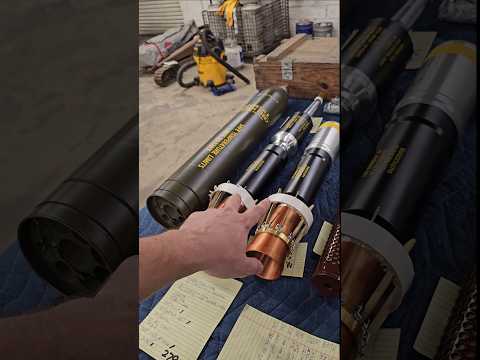
This video provides a detailed, ASMR-style guide to restoring an M501A1 Mechanical Time Superquick Fuze, demonstrating advanced metalworking and assembly techniques. The process involves using specialized industrial machinery like bench grinders, shop presses, and lathes for precise component manipulation and finishing. The restoration concludes with protective coating and final assembly onto an artillery projectile and casing, showcasing professional ordnance handling.

Quick Summary

The M501A1 Mechanical Time Superquick Fuze is restored using advanced metalworking techniques. This process involves precision grinding with a JET bench grinder, assembly via a FAMCO shop press, sandblasting for surface preparation, and high-speed buffing for a mirror finish. A final clear coat protects the polished brass and aluminum components from oxidation.

Chapters

  1. 00:00Introduction to M501A1 Fuze
  2. 00:07Grinding and Polishing Nose Cone
  3. 00:19Press Assembly of Nose Cone
  4. 00:32Sandblasting for Surface Prep
  5. 00:41High-Speed Buffing and Polishing
  6. 00:53Cleaning and Clear Coating
  7. 01:04Final Assembly with Projectile

Frequently Asked Questions

What is the function of an M501A1 Mechanical Time Superquick Fuze?

The M501A1 Fuze is a dual-purpose ordnance component. It is designed to detonate either after a specific time delay, creating an airburst effect, or immediately upon impact with a target, known as superquick detonation.

What industrial tools are used in the M501A1 Fuze restoration process?

The restoration involves specialized industrial machinery. Key tools include a JET brand bench grinder for shaping, a FAMCO industrial shop press for assembly, a sandblasting cabinet for surface preparation, and a lathe or high-speed buffer for achieving a polished finish.

How is the restored M501A1 Fuze protected?

After meticulous polishing, the fuze is cleaned with a solvent. A clear coat spray is then applied to the brass and aluminum components. This protective layer prevents oxidation and preserves the restored, mirror-like finish.

What are the key steps in restoring an M501A1 Fuze?

The process includes grinding and polishing the nose cone, using a shop press for assembly, sandblasting for surface preparation, high-speed buffing, cleaning, applying a protective clear coat, and finally assembling the fuze onto an artillery projectile and casing.

Related News

All News โ†’

More Gunsmithing & DIY Videos You Might Like

More from Ordnance

View all โ†’