Colt 1911 Parkerize and Restore: Anvil 0107

Published on December 24, 2021
Duration: 21:49

This video details the Parkerizing and restoration of a Colt 1911, identified as having an Ithaca-manufactured frame from 1943 with Augusta Arsenal rebuild marks. The process involves complete disassembly, glass bead blasting for surface preparation, and a zinc phosphate Parkerizing finish. It highlights the importance of thorough cleaning to prevent oil contamination during the chemical treatment and discusses the collectability of 'mix-master' firearms.

Quick Summary

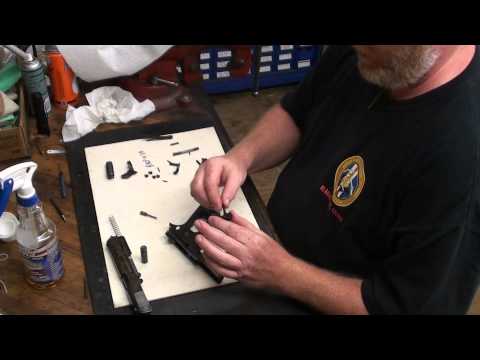
Complete disassembly is crucial before Parkerizing a firearm because oil trapped under components can escape via capillary action during the hot chemical process, creating spots and ruining the finish. Every part must be stripped.

Chapters

  1. 00:00Introduction & Test Fire
  2. 00:54Firearm ID & History (Ithaca Frame, Israeli Parts)
  3. 04:13Complete Disassembly Tips
  4. 11:01Surface Prep: Glass Bead Blasting
  5. 12:47The Parkerizing Process (Zinc Phosphate)
  6. 14:55Post-Treatment & Lubrication
  7. 18:16Conclusion: 'Mix-Master' 1911 Value

Frequently Asked Questions

What is the correct finish for restoring a WWII-era Colt 1911?

For a historically appropriate finish on a WWII-era 1911, a zinc phosphate Parkerizing is recommended. This process provides a durable, matte grey-to-black tone that matches original military specifications.

Why is complete disassembly crucial before Parkerizing a firearm?

Complete disassembly is vital before Parkerizing because oil trapped under components can escape via capillary action during the hot chemical process, creating spots and ruining the finish. Every part must be stripped.

How is the surface prepared for Parkerizing?

The firearm parts are typically prepared for Parkerizing using glass bead blasting. This removes old finishes, rust, and creates a matte surface with enough 'tooth' for the phosphate coating to adhere effectively.

What is the purpose of treating parts with oil after Parkerizing?

After Parkerizing, parts are treated with a water-displacing oil, such as kerosene, to drive out any residual moisture from the porous finish. This helps prevent flash rust and protects the newly applied finish.

Related News

All News →

More Gunsmithing & DIY Videos You Might Like

More from Mark Novak

View all →