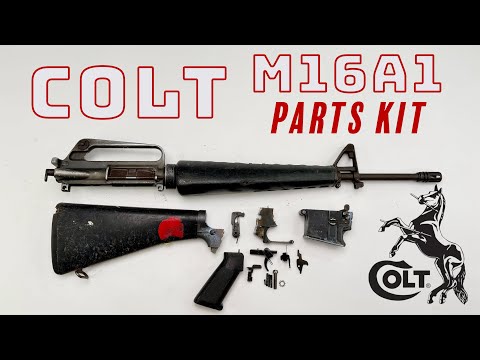
COLT M16A1

Published on November 7, 2020
Duration: 8:09

This guide provides a step-by-step overview of disassembling and maintaining the Colt M16A1, based on insights from Larry Vickers. It covers the field stripping process, emphasizing the importance of cleaning and lubrication for the direct impingement system's reliability. The guide highlights key components like the birdcage flash suppressor and triangular handguards, offering a glimpse into the rifle's historical context and operational nuances.

Quick Summary

The Colt M16A1 is an iconic rifle featuring a 20-inch barrel, 7.5 lbs loaded weight, and a 1:12 twist rate optimized for 55-grain M193 ammunition. Its design includes chrome-lined components for corrosion resistance and a birdcage flash suppressor. Larry Vickers highlights its reliability when lubricated and its historical significance from Vietnam service and his own basic training.

Chapters

  1. 00:28Introduction and Historical Context
  2. 01:06Technical Specifications and Barrel Evolution
  3. 02:43Flash Suppressor and Handguards
  4. 04:05Receiver and Controls
  5. 05:24Buttstock and Performance Assessment

Frequently Asked Questions

What are the key technical specifications of the Colt M16A1?

The Colt M16A1 features a 20-inch barrel, a 39.5-inch overall length, and weighs approximately 7.5 pounds when loaded. It has a 1:12 twist rate barrel optimized for 55-grain M193 ammunition and a rate of fire between 750-900 rounds per minute.

What historical context is provided for the Colt M16A1 in the video?

Larry Vickers discusses using the Colt M16A1 during his basic training in 1981 at Fort Benning, Georgia. He notes that a rifle with a 1.7 million serial number was likely manufactured in 1969 and may have seen service in Vietnam.

How does the M16A1's design address environmental challenges?

The M16A1 incorporates chrome-lined chambers and bores to prevent corrosion, a critical feature for reliability in humid environments like Vietnam. The birdcage flash suppressor also replaced an earlier design that could snag on vegetation.

What are the main differences between the M16A1 and later models like the M16A2?

The M16A1 lower receiver lacks reinforcements found on A2 models and does not have a built-in brass deflector, which was added to the A2. The A1 buttstock is also slightly shorter and more rounded than the A2 version.

Related News

All News →

More Gunsmithing & DIY Videos You Might Like

More from Vickers Tactical

View all →