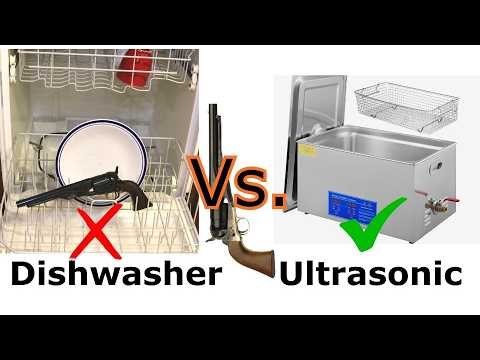
Dirty Suppressor vs. Ultrasonic Cleaning with Deuce

Published on July 30, 2018
Duration: 7:36

This guide details how to clean a dirty suppressor using an ultrasonic cleaner and Purple Power solution. While ultrasonic cleaning effectively softens carbon buildup on stainless steel or titanium internals, some manual scraping with a screwdriver and scrubbing of the blast chamber with a pipe brush may still be necessary for a factory-clean finish. The presenter, Deuce, emphasizes that ultrasonic cleaning is beneficial but not a complete miracle cure for heavily fouled suppressors.


Quick Summary

Ultrasonic cleaning is effective for stainless steel or titanium suppressor internals, but aluminum parts must be removed. Use a solution of water and Purple Power cleaner, and be prepared for some manual scraping and brushing of the blast chamber with a pipe cleaning brush for a thorough clean.

Chapters

  1. 00:00Introduction & Rainy Day Cleaning
  2. 00:20Ultrasonic Cleaner for Suppressors
  3. 00:30Aluminum vs. Stainless Steel in Ultrasonic Cleaners
  4. 00:48Disassembling the Suppressor
  5. 01:16Carbon Buildup Assessment
  6. 01:59Initial Ultrasonic Cleaning Results
  7. 02:31Switching to Purple Power Solution
  8. 02:56Post-Ultrasonic Cleaning Results
  9. 03:17Manual Scraping & Brushing
  10. 03:44Cleaning the Blast Chamber
  11. 04:07Recommended Cleaning Brushes
  12. 05:08Using Pipe Brush on Baffles
  13. 05:22Common Cleaning Mistakes
  14. 06:01Effective Cleaning Solutions
  15. 06:14Specialty vs. DIY Suppressor Cleaners
  16. 06:40Ultrasonic Cleaner Versatility
  17. 07:14Conclusion & Channel Support

Frequently Asked Questions

Can I use an ultrasonic cleaner for all suppressor parts?

No, you cannot put aluminum suppressor components in an ultrasonic cleaner. Only stainless steel or titanium parts are safe for this cleaning method. Aluminum parts, such as the outer tube or mounts, should be cleaned separately.

What is the best cleaning solution for ultrasonic cleaning of suppressors?

While standard brass cleaning solutions are ineffective, a mixture of water and Purple Power cleaner is highly recommended for ultrasonic cleaning of suppressor internals. This combination has proven very effective at removing heavy carbon buildup.

Does ultrasonic cleaning completely clean a suppressor?

Ultrasonic cleaning significantly softens carbon and buildup, making it easier to remove. However, some stubborn residue, especially in the blast chamber, may still require manual scraping with a screwdriver and scrubbing with a pipe cleaning brush for a complete clean.

What tool is best for cleaning the blast chamber of a suppressor?

For the blast chamber, the area closest to the muzzle, a plumber's or pipe cleaning brush is highly effective. A 1-inch brush is suitable for most suppressors, with smaller sizes recommended for .22 caliber cans.

More Gunsmithing & DIY Videos You Might Like

More from DEUCE AND GUNS

View all →