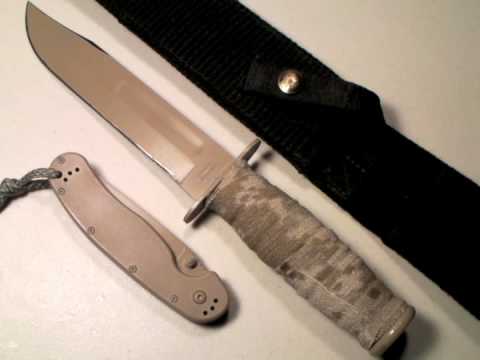
DuraCoat Project: Cold Steel Long Hunter

Published on February 15, 2009
Duration: 9:57

This guide details the process of applying DuraCoat to a Cold Steel Long Hunter knife blade for reduced reflectivity, suitable for tactical use. It covers essential preparation steps like sanding and applying a phosphate treatment for better adhesion, followed by the DuraCoat application and precise edge preparation using a razor blade. The process emphasizes proper curing for optimal durability.


Quick Summary

To prepare a knife blade for DuraCoat, thoroughly sand it with 440-grit sandpaper and apply a phosphate treatment like Low Weaponry's Dura Floss for enhanced adhesion. After spraying DuraCoat, carefully 'blade off' the cutting edge with a razor blade before the coating cures. Allow 2-3 weeks for full hardness.

Chapters

  1. 00:07Introduction: Revisiting the Cold Steel Long Hunter
  2. 00:44DuraCoat Project: Modifying the Blade
  3. 01:51DuraCoating Process: Coyote Brown Application
  4. 02:05Blade Preparation: Sanding and Phosphate Treatment
  5. 02:44Edge Preparation with Razor Blade
  6. 03:13Finished DuraCoated Blade: Coyote Brown
  7. 03:20Handle Modifications and Wear
  8. 04:01Adding Grip to the Knife Spine
  9. 04:22Exposed Edge Technique Explained
  10. 04:40DuraCoat Curing and Durability
  11. 05:06Testing and Expertise Building
  12. 05:35Best Practices for Adhesion: Sandblasting
  13. 05:46Lanyard Hole Addition
  14. 06:13Tactical Tan 550 Cord Lanyard
  15. 06:39Sheath Extraction and Fit
  16. 06:59Sheath Modification: Camo Form Application
  17. 07:32Camo Form: Reusable Elastic Bandage
  18. 08:08Attaching Sheath to MOLLE Gear
  19. 08:19550 Cord and Duct Tape Mounting Method
  20. 09:12Conclusion: Modified Cold Steel Long Hunter

Frequently Asked Questions

How do you prepare a knife blade for DuraCoat application?

To prepare a knife blade for DuraCoat, thoroughly sand it with 440-grit sandpaper. Then, apply a phosphate treatment like Low Weaponry's Dura Floss to enhance adhesion. This ensures the DuraCoat bonds effectively to the steel surface for a durable finish.

What is the best way to maintain a sharp edge after DuraCoating a knife blade?

After applying DuraCoat and allowing it to dry for a few hours, use a single-edged razor blade to carefully 'blade off' the cutting edge before the coating fully cures. This preserves the sharpness of the blade while the DuraCoat hardens.

How can I make my knife sheath more tactical and less reflective?

You can make a knife sheath less reflective by wrapping it with Camo Form, a reusable elastic camouflage material. For MOLLE gear attachment, create an X-pattern with 550 cord on the sheath's back, secure it with duct tape, and then wrap the Camo Form through the cord.

What is DuraCoat and how long does it take to cure?

DuraCoat is an epoxy-based firearm coating known for its durability and low reflectivity. It reaches its full hardness and resistance to extreme duty after a curing period of two to three weeks.

Related News

All News โ†’

More Gunsmithing & DIY Videos You Might Like

More from nutnfancy

View all โ†’