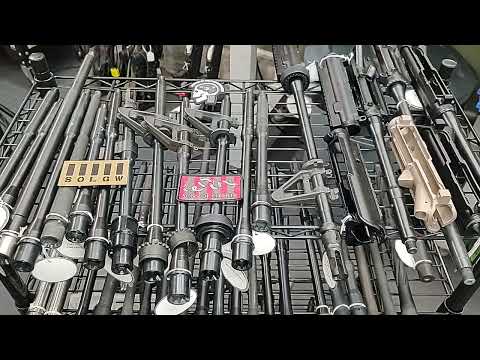
Faxon Q&A #2: Barrel profiles, length, fluting and more!

Published on March 17, 2017
Duration: 33:50

This guide, drawing on expertise from Faxon Firearms and InRangeTV, details the technical aspects of AR-15 barrel profiles, length, and treatments. It explains how profile affects rigidity and heat management, discusses historical context from the M16 to modern AR-15s, and advises on choosing the right profile for civilian use versus military applications. The guide also covers the benefits and trade-offs of fluting and nitriding, emphasizing quality control.


Quick Summary

AR-15 barrel profiles primarily influence rigidity and heat management. Thicker barrels offer better heat dissipation and maintain accuracy under sustained fire. Shorter barrels can be more accurate due to increased rigidity, while longer barrels maximize velocity. Fluting reduces weight and aids cooling, and precise nitriding control is crucial for durability.

Chapters

  1. 00:00Introduction to Barrel Profiles
  2. 01:15Rigidity and Heat Management
  3. 03:53Historical Context: M16 and M16A2
  4. 05:37Choosing a Profile for Civilian Use
  5. 08:45Military vs. Civilian Applications
  6. 13:01Barrel Length and Accuracy
  7. 15:07The Role of Fluting
  8. 18:45Nitriding and Quality Control

Frequently Asked Questions

What is the primary function of an AR-15 barrel's profile?

The barrel profile primarily affects rigidity and heat management. Thicker profiles provide more rigidity and act as a larger heat sink, preventing accuracy loss as the barrel heats up during firing.

How does barrel length affect AR-15 accuracy?

Shorter barrels can be more accurate because they are more rigid and experience less harmonic whip. Longer barrels are generally chosen to increase projectile velocity rather than for inherent accuracy.

What are the benefits of fluting an AR-15 barrel?

Fluting reduces barrel weight and increases surface area for faster cooling. While it slightly decreases rigidity compared to a solid barrel of the same outer diameter, it's more rigid than a round barrel of the same weight.

Should civilian AR-15s use heavy barrels?

For most civilian shooters, the weight penalty of a heavy barrel outweighs the benefits. Lighter profiles are often recommended due to modern manufacturing advancements making them more reliable.

More Gunsmithing & DIY Videos You Might Like

More from InRangeTV

View all →