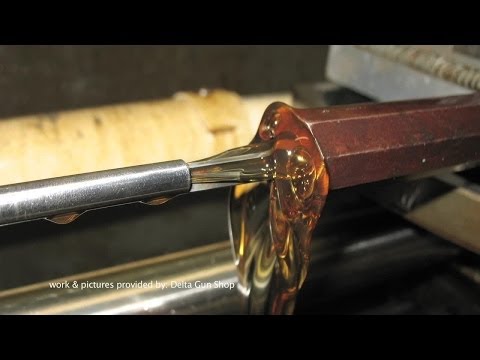
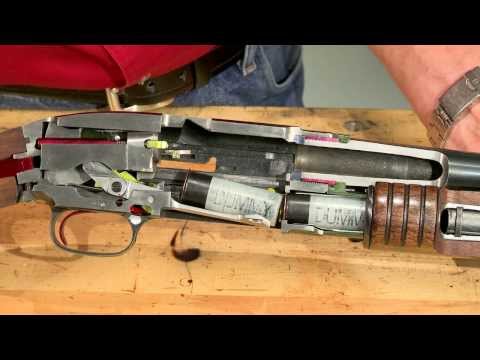
Gunsmithing - Stock Finishing with Bar Top Varnish Presented by Larry Potterfield of MidwayUSA

Published on January 20, 2014
Duration: 5:49

This video demonstrates an advanced gunstock finishing technique using bar top varnish for a highly durable and moisture-repellent result. It details a multi-step process involving thinned initial coats, grain filling with straight varnish, careful removal of excess material with a buffing wheel, and wet sanding for a level surface. The process concludes with thin coats of boiled linseed oil and a final polish using rottenstone, emphasizing proper drying conditions and safety precautions.

Quick Summary

Bar top varnish provides a highly durable, moisture-repellent finish for gunstocks. Apply thinned coats first, followed by straight varnish coats to fill grain, buffing across the grain with a muslin wheel. Wet sand, apply thin oil coats, and cure in a 110°F, <10% humidity environment.

Chapters

  1. 00:00Introduction to Bar Top Varnish
  2. 00:30Initial Varnish Application
  3. 01:03Filling the Wood Grain
  4. 01:27Removing Excess Varnish with Buffer
  5. 01:53Wet Sanding and Leveling
  6. 03:03Applying Linseed Oil Finish
  7. 03:41Drying and Curing Process
  8. 04:15Safety and Final Polishing

Frequently Asked Questions

What is bar top varnish and why use it for gunstocks?

Bar top varnish is a highly durable and moisture-repellent finish. It's ideal for gunstocks as it provides superior protection against the elements compared to traditional finishes, ensuring longevity and maintaining the wood's integrity.

How do you apply the first coat of bar top varnish?

The first coat should be thinned 50/50 with a reducer. Apply it liberally, allow it to soak into the wood for about 15 minutes, then wipe off the excess and let it dry for at least 12 hours.

What is the process for filling the wood grain with varnish?

Apply two coats of undiluted bar top varnish to fill the wood grain completely. Ensure at least 12 hours of drying time between each coat for proper curing and adhesion.

How is excess varnish removed after application?

Excess surface varnish is removed using a 10-inch loose cotton muslin buffing wheel spinning at 1800 RPM. It's crucial to buff across the grain to avoid pulling varnish out of the wood pores.

What are the recommended drying conditions for the oil finish?

The stock should be dried in a cabinet set to approximately 110°F with humidity levels below 10%. This controlled environment ensures the boiled linseed oil cures properly.

More Gunsmithing & DIY Videos You Might Like

More from MidwayUSA

View all →