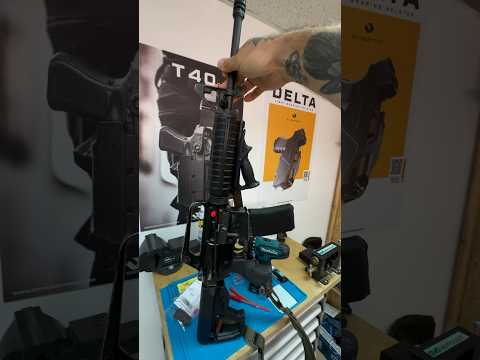
H&K G41: The HK33 Meets the M16

Published on January 25, 2019
Duration: 12:11

This guide details the disassembly of the H&K G41, highlighting its M16-inspired features integrated into the HK roller-delayed system. It covers removing the bolt carrier group, bolt, and observing modifications like the forward assist notches and improved recoil spring. The guide emphasizes safety during the process, suitable for intermediate users familiar with firearm mechanics.

Quick Summary

The H&K G41 is a 5.56mm rifle that merged Heckler & Koch's roller-delayed blowback action with M16 features like a forward assist, dust cover, and STANAG magazine compatibility. Developed from the HK33, it aimed for improved functionality but was heavier and more complex, ultimately leading to limited commercial success.

Chapters

  1. 00:00Introduction to the H&K G41
  2. 01:16M16-Style Feature Integration
  3. 01:58Receiver Markings and Controls
  4. 02:44Selector Switch and Pictograms
  5. 03:52Optics and Mounting
  6. 06:39Variants and Barrel Specs
  7. 08:06Disassembly and Internal Comparison
  8. 11:06Conclusion and Commercial History

Frequently Asked Questions

What is the H&K G41?

The H&K G41 is a 5.56x45mm NATO rifle developed by Heckler & Koch. It represents an evolution of the HK33, integrating several features from the M16 rifle into HK's renowned roller-delayed blowback system.

What M16 features were added to the H&K G41?

Key M16-inspired additions to the G41 include a dust cover, a forward assist (termed a 'silent bolt closure device' by HK), a bolt hold-open mechanism, and the ability to use standard NATO (M16) pattern magazines.

What are the main variants of the H&K G41?

The H&K G41 was produced in at least two main variants: the standard rifle with a 17.7-inch barrel and fixed stock, and the G41K, a more compact version featuring a 15-inch barrel and a collapsing stock.

Why was the H&K G41 not widely adopted?

Despite its technical improvements and integration of popular M16 features, the H&K G41 was a commercial failure. It was heavier and more complex than its predecessor, the HK33, and failed to gain widespread military adoption.

More Gunsmithing & DIY Videos You Might Like

More from Forgotten Weapons

View all →