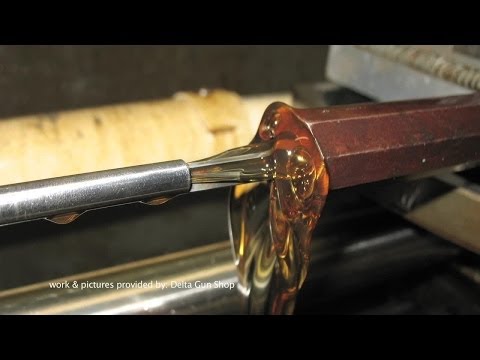
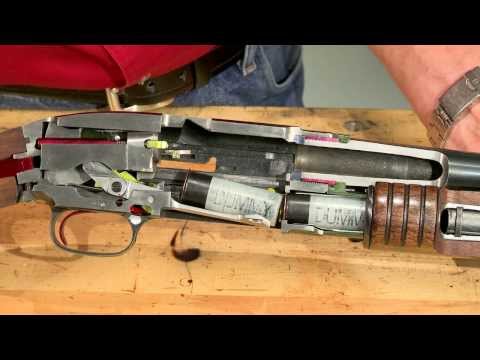
How to Remove Trigger Serrations on a Smith and Wesson Revolver | Smith & Wesson Revolver Project

Published on July 12, 2013
Duration: 1:57

This guide details how to remove trigger serrations from a Smith & Wesson revolver for an improved double-action feel. The process involves careful grinding with a rotary tool, followed by sanding and polishing to achieve a smooth, mirror finish. The modification is presented as an accessible project that can significantly alter the shooting experience of a double-action revolver.

Quick Summary

Removing trigger serrations on a Smith & Wesson revolver can significantly improve the feel of the double-action pull. The process involves securing the trigger in a padded vise and using a rotary tool with a coarse grinding wheel to remove the serrations, as they are typically case-hardened. This is followed by sanding and polishing for a smooth, mirror finish.

Chapters

  1. 00:09Project Overview: Smooth Trigger Feel
  2. 00:19Rationale for Smooth Trigger
  3. 00:29Trigger Removal Process
  4. 00:37Securing the Trigger
  5. 00:41Grinding Off Serrations
  6. 00:54Grinding Technique Tips
  7. 01:15Sanding and Radiusing Edges
  8. 01:23Polishing for a Mirror Finish
  9. 01:32Cold Bluing and Reassembly
  10. 01:48Final Result and Feel Change

Frequently Asked Questions

Why remove trigger serrations on a Smith & Wesson revolver?

Removing trigger serrations can significantly improve the feel of a double-action revolver. A smooth trigger face offers a different, often more comfortable, tactile experience during double-action shooting compared to a serrated one.

What tools are needed to remove trigger serrations?

You'll need a padded vise to secure the trigger, a rotary tool (like a Dremel) with a coarse grinding wheel for initial removal, a fine-grit sanding drum for smoothing, and a Cratex polishing wheel for a mirror finish. Cold blue is used for protection.

Can trigger serrations be filed off a Smith & Wesson revolver?

No, it's generally not recommended to file off trigger serrations on most Smith & Wesson revolvers. The triggers are typically case-hardened, making them too hard to file effectively. Grinding is the preferred method for removal.

How do you ensure a consistent grind when removing trigger serrations?

Support your hands on the vise while grinding to maintain stability and consistency. As you approach the edges, rotate the trigger 180 degrees to prevent the grinding wheel from accidentally rolling over the edge and causing damage.

More Gunsmithing & DIY Videos You Might Like

More from MidwayUSA

View all →