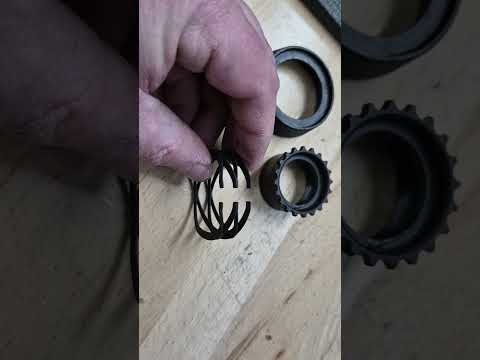
How To Swap Out Any AR-15 Barrel

Published on July 16, 2017
Duration: 13:11

This guide details the process of swapping an AR-15 barrel, emphasizing the use of specialized tools like a reaction rod and torque wrench for safe and accurate installation. It covers disassembly, preparation of receiver threads with specific grease, barrel nut torquing, gas block alignment, and the critical step of checking headspace. The instruction comes from an expert demonstrating a complete technical procedure with attention to safety and proper tool usage.

Quick Summary

When swapping an AR-15 barrel, use a reaction rod to protect the upper receiver from torque stress. Torque the barrel nut to 40 ft-lbs, repeating the torque-and-loosen cycle three times. Always check headspace after installation, especially with used bolts, to ensure safe operation.

Chapters

  1. 00:00Introduction and Problem Identification
  2. 00:21Project Overview: Barrel Swap
  3. 00:45Disassembly and Tools Required
  4. 01:44Removing the Barrel Nut
  5. 03:02Reaction Rod Mechanics Explained
  6. 03:38Introducing the New Barrel
  7. 04:27Preparation and Greasing Receiver Threads
  8. 05:19Barrel Installation Steps
  9. 05:46Torquing the Barrel Nut Procedure
  10. 07:22Handguard and Gas System Alignment
  11. 08:52Gas Block Assembly and Pinning
  12. 09:41Final Assembly Steps
  13. 12:12Headspace Check and Range Test

Frequently Asked Questions

What is the most critical tool for safely swapping an AR-15 barrel?

The most critical tool for safely swapping an AR-15 barrel is a reaction rod. It inserts directly into the barrel extension, preventing torque stress on the upper receiver's index pin, which is crucial for maintaining the receiver's integrity during disassembly and installation.

How tight should an AR-15 barrel nut be torqued?

An AR-15 barrel nut should typically be torqued to 40 ft-lbs. It's recommended to perform a torque-and-loosen cycle three times to ensure the threads are fully seated and achieve consistent pressure on the barrel extension.

Why is checking headspace important after an AR-15 barrel change?

Checking headspace is vital after an AR-15 barrel change, especially when using a new barrel with a used bolt. Incorrect headspace can lead to dangerous malfunctions, such as case ruptures or failure to fire, compromising firearm safety.

What type of grease is recommended for AR-15 barrel nut threads?

Molybdenum Disulfide Grease, such as AeroShell 64, is highly recommended for AR-15 barrel nut threads. This type of grease prevents the aluminum receiver and steel barrel nut from seizing due to friction and heat cycles.

Related News

All News →

More Gunsmithing & DIY Videos You Might Like

More from DEUCE AND GUNS

View all →