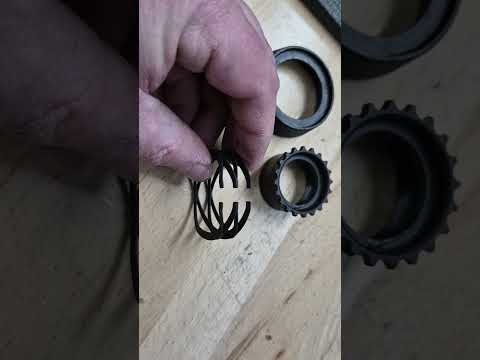
How To Swap Out Any AR-15 Barrel

Published on July 16, 2017
Duration: 13:11

This video details the process of swapping an AR-15 barrel, focusing on improving reliability with subsonic .300 Blackout loads. Key steps include using a reaction rod for safe disassembly/assembly, proper greasing of threads to prevent seizing, and precise torquing of the barrel nut. The host also covers gas block installation and alignment for a successful build.

Quick Summary

Swap your AR-15 barrel for improved performance, especially with .300 Blackout subsonic loads. Use a reaction rod to protect the receiver, grease threads to prevent seizing, and torque the barrel nut to 40 ft-lbs. Proper gas system alignment is key for reliable cycling.

Chapters

  1. 00:00Intro: Why Swap Your AR-15 Barrel?
  2. 00:21Project Goal: Barrel Replacement Overview
  3. 00:45Disassembly & Essential Tools
  4. 01:44Removing the Barrel Nut
  5. 03:02How a Reaction Rod Works
  6. 03:38Introducing the New Barrel
  7. 04:27Greasing Receiver Threads
  8. 05:19Installing the New Barrel
  9. 05:46Torquing the Barrel Nut
  10. 07:22Handguard Alignment & Gas Block Realization
  11. 08:52Gas Block & Gas Tube Assembly
  12. 09:41Final Assembly Steps
  13. 12:12Headspace Check & Range Test

Frequently Asked Questions

What is the primary reason for swapping an AR-15 barrel in this video?

The host swaps his AR-15 barrel to improve reliability when cycling subsonic .300 Blackout ammunition. His previous carbine-length gas system setup was underperforming with these specific loads, prompting the upgrade to a barrel with a pistol-length gas system.

What specialized tools are essential for an AR-15 barrel swap?

Essential tools include a vise to secure the upper receiver, a reaction rod to support the barrel extension and prevent receiver stress, and an armorer's wrench for the barrel nut. A torque wrench is also critical for proper installation.

Why is greasing the barrel nut threads important during an AR-15 barrel swap?

Greasing the threads with a suitable lubricant like AeroShell 64 prevents the steel barrel nut from seizing onto the aluminum upper receiver threads. This is crucial for future disassembly and prevents damage caused by friction and heat.

What is the correct torque specification for an AR-15 barrel nut?

The host torques the barrel nut to 40 ft-lbs. He also emphasizes the practice of torquing and then loosening the nut three times to ensure the threads are fully seated and the nut is properly secured without over-stressing components.

Related News

All News →

More Gunsmithing & DIY Videos You Might Like

More from DEUCE AND GUNS

View all →