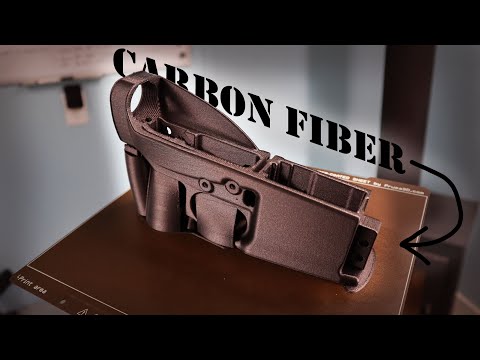
Infill Vs. Perimeters. Which Is Better For Strong 3D Prints?

Published on January 23, 2021
Duration: 13:09

This video from Hoffman Tactical investigates whether 100% infill with few walls or more perimeters with less infill yields a stronger 3D print, specifically for AR-15 lower receivers. Through a controlled stress test, the experiment aims to determine the optimal print settings for maximum part strength. The findings suggest that while the direct comparison was inconclusive due to an outlier, making a part solid (100% infill) is generally stronger than using lower infill percentages, even with more walls. Warping is also discussed as a factor influenced by infill patterns.

Quick Summary

For maximum strength in 3D printed parts, especially for functional components like AR-15 lower receivers, making the part solid with 100% infill is generally recommended. While the direct comparison between 100% infill and 100% perimeters was inconclusive in this test, solid parts offer superior absolute strength. Additionally, rectilinear infill patterns can help reduce warping compared to high-perimeter prints.

Chapters

  1. 00:00Introduction: Infill vs. Perimeters
  2. 00:46Test Sample Preparation
  3. 01:03Test Setup and Fixture
  4. 01:33Layer Line Orientation for Testing
  5. 02:03Print Settings and Consistency
  6. 02:37Testing Rectilinear Infill Samples
  7. 03:09Rectilinear Infill Results
  8. 03:34Testing Perimeter (All Walls) Samples
  9. 03:51Perimeter Sample Results
  10. 04:14Initial Comparison and Observations
  11. 04:31Final Perimeter Sample Test
  12. 04:46Inspection of All Samples
  13. 04:57Analysis of Break Points
  14. 05:32Conclusion: Inconclusive Results & Warping
  15. 05:50Warping Differences: Infill vs. Perimeters
  16. 06:32Inconclusive Test Results & Next Steps
  17. 06:48Importance of Other Print Settings
  18. 07:12Solid Parts are Strongest
  19. 07:47Future Testing and Outro

Frequently Asked Questions

What is the main difference between printing with infill and printing with perimeters?

Printing with infill involves filling the internal volume of a 3D print with a pattern like rectilinear, while printing with perimeters means using multiple solid outer walls to build the part. The video tests whether a part with many solid walls is stronger than one with fewer walls and a high percentage of infill.

Which 3D print setting is generally stronger: more walls or more infill?

Based on the video's findings, making a 3D printed part completely solid (100% infill) is generally stronger in an absolute sense than using lower infill percentages, even with more walls. However, the direct comparison between 100% infill and 100% perimeters was inconclusive in this specific test.

Does infill pattern affect print warping?

Yes, the infill pattern can affect warping. Rectilinear infill, with its alternating 90-degree pattern, tends to even out internal stresses, leading to less warping compared to prints with a high number of perimeters where stresses can build up in a single direction.

What are the key print settings to consider for strong 3D prints besides infill and perimeters?

Besides infill and perimeters, crucial settings for strong 3D prints include the extrusion factor (ensuring sufficient plastic extrusion) and print temperature (to achieve proper material properties and layer adhesion). These factors significantly impact the overall strength and integrity of the printed object.

Related News

All News →

More Gunsmithing & DIY Videos You Might Like

More from Hoffman Tactical

View all →