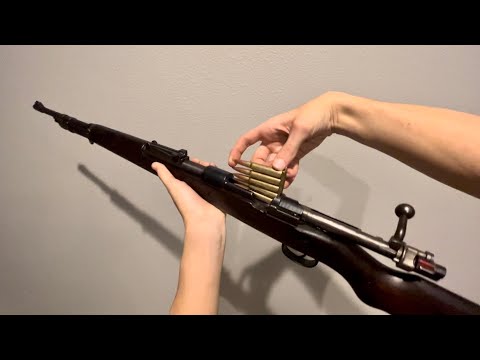
Kar 98 AZ Overhaul and Restoration: Anvil 0115

Published on August 19, 2022
Duration: 84:04

This video details the extensive process of restoring a Kar98 AZ rifle that suffered significant damage, including a 'duffel cut' to the stock. The instructor demonstrates how to assess and repair missing wood, reinforce the joint with epoxy and metal, and refinish the stock while preserving original character. It also covers the repair of a dented magazine and various other metal components, showcasing advanced gunsmithing techniques for historical firearms.

Quick Summary

Repairing a 'duffel cut' on a Kar98 AZ rifle stock involves replacing missing wood with an oversized end-grain piece, using Acraglas for adhesion, and then carefully shaping and refinishing it to match the original. This process preserves the firearm's historical character while restoring its structural integrity.

Chapters

  1. 00:00Introduction: The Damaged Kar98 AZ
  2. 00:54Assessing the Duffel Cut Damage
  3. 01:11Dealing with Old Glue and Wood Loss
  4. 02:51Measuring Missing Wood
  5. 05:00Preparing the Replacement Wood Piece
  6. 05:36Gluing the Wood Patch
  7. 06:06Shaping the Repaired Section
  8. 08:02Applying Acraglas for Strength
  9. 10:37Removing Old Finish with a Scraper
  10. 13:04Light Sanding and Preserving Character
  11. 17:22Final Shaping and Alignment
  12. 18:30Preparing for the Duffel Cut Repair
  13. 19:33Filling the Notch with Acraglas
  14. 21:00Drilling Holes for Reinforcement
  15. 23:41Tapping Threads for Reinforcement Screw
  16. 25:11Fitting the Reinforcement Screw
  17. 26:16Final Acraglas Application and Curing
  18. 32:01Repairing a Dented Magazine Box
  19. 39:03Removing the Temporary Jig
  20. 41:22Cleaning Up the Repaired Stock
  21. 43:16Refinishing the Entire Stock
  22. 43:46Repairing the Nose Metal
  23. 44:42Final Stock and Handguard Treatment
  24. 46:32Metal Conservation and Bluing
  25. 47:35Rear Sight Repair
  26. 48:07Trigger and Sear Inspection
  27. 48:22Bolt Group Inspection
  28. 48:43Bottom Metal Condition
  29. 49:50Sling Inspection
  30. 50:26Final Rear Sight Straightening
  31. 51:36Stock Assembly and Alignment
  32. 53:05Caution: Magnetic Tools on Workbench
  33. 54:17Magazine Assembly and Spring Issues
  34. 56:39Spring-Loaded Bolt Hold Open Assembly
  35. 57:39Rear Sight Installation
  36. 58:05Ejector and Bolt Retention Device Assembly
  37. 61:39Replacing a Broken Trigger Pin
  38. 63:20Trigger Return Spring and Bolt Capture
  39. 65:34Bolt Disassembly and Reassembly
  40. 71:47Bolt Assembly Tool Explained
  41. 73:08Lubrication and Bolt Function Check
  42. 74:47Action Reassembly and Safety Check
  43. 75:25Sling Swivel and Nose Metal Installation
  44. 77:43Nose Metal Retention Mechanism
  45. 78:43Locking Screw Installation
  46. 79:52Magazine Installation
  47. 81:01Final Cleaning and Bore Check
  48. 81:33Live Fire Test and Ammunition Loading
  49. 82:35Magazine Feeding and Ejection Performance
  50. 83:09Conclusion: Restored Kar98 AZ

Frequently Asked Questions

What is a 'duffel cut' on a firearm stock?

A 'duffel cut' is a crude cut made through a firearm's stock, often by soldiers or handlers, to make the weapon easier to pack or carry. These cuts typically render the firearm inoperable until they are properly repaired by a gunsmith.

How can a 'duffel cut' on a Kar98 AZ stock be repaired?

Repairing a 'duffel cut' involves assessing the missing wood, preparing an oversized replacement piece of end-grain wood, gluing it in place with a strong epoxy like Acraglas, and then carefully shaping and refinishing it to match the original stock.

What are the key steps in restoring a damaged historical firearm like the Kar98 AZ?

Restoration involves assessing damage, repairing structural issues like duffel cuts or dents, cleaning and conserving metal parts (often with rust bluing), refinishing the stock appropriately, and reassembling all components while preserving original character.

Why is it important to preserve the original finish and character of a historical firearm?

Preserving the original finish and character of historical firearms is crucial for maintaining their authenticity and value. Aggressive sanding or over-finishing can erase historical evidence and make the firearm appear artificial.

Related News

All News →

More Gunsmithing & DIY Videos You Might Like

More from Mark Novak

View all →