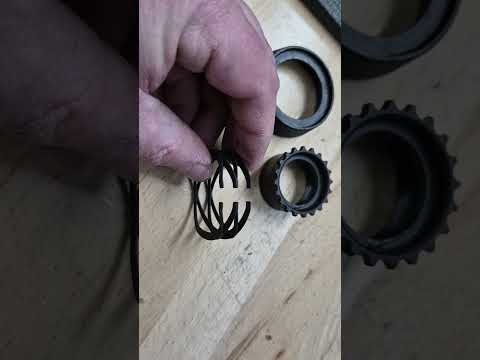
Quick Tip: Where Should I Use Loctite on my AR-15?

Published on September 10, 2020
Duration: 6:28

This guide, presented by Caleb and Steve from Brownells, details the correct application of adhesives and fasteners on an AR-15. It emphasizes avoiding Loctite on critical components like castle nuts and grip screws due to risks of stripped threads and recommends Rocksett for high-heat areas like muzzle devices. Proper torque and staking are highlighted as superior methods for securing these parts.

Quick Summary

For AR-15 assembly, avoid standard Loctite on castle nuts and grip screws due to risks of stripped aluminum threads. Use proper staking for castle nuts and correct torque for grip screws. For high-heat areas like muzzle devices and suppressors, Rocksett is the recommended adhesive, capable of withstanding up to 1300°F.

Chapters

  1. 00:00Introduction to Loctite on AR-15
  2. 00:33Understanding Loctite Types
  3. 00:57Castle Nut Application Advice
  4. 02:11Pistol Grip Screw Warnings
  5. 02:56Barrel Nut and Torque Considerations
  6. 04:08Muzzle Devices and Rocksett Recommendation
  7. 04:50Gas Blocks and Heat Issues
  8. 05:43Conclusion: Torque is Key

Frequently Asked Questions

Where should I NOT use Loctite on an AR-15?

Avoid using standard Loctite on AR-15 castle nuts and pistol grip screws. Loctite can cause stripped threads on aluminum components and is not a substitute for proper staking or torque.

What is the best adhesive for AR-15 muzzle devices and suppressors?

For AR-15 muzzle devices and suppressors, Rocksett is recommended. It is specifically designed to withstand high temperatures, up to 1300°F, preventing loosening under extreme heat conditions.

Why is staking preferred over Loctite for AR-15 castle nuts?

Staking provides a reliable mechanical lock for AR-15 castle nuts, preventing them from loosening due to vibration. Loctite can degrade under heat and potentially damage the aluminum threads of the receiver extension.

Can I use Loctite on an AR-15 barrel nut?

No, Loctite should not be used as a substitute for proper torque on an AR-15 barrel nut. Ensuring the correct torque is applied is crucial for barrel stability and future maintenance.

Related News

All News →

More Gunsmithing & DIY Videos You Might Like

More from Brownells, Inc.

View all →