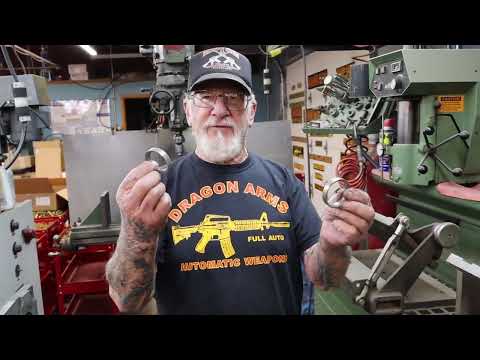
Repairing cam hole

Published on August 9, 2018
Duration: 3:30

This guide details the advanced gunsmithing process of relocating a cam hole on Harley Davidson engine cases, specifically for models from 1972-1999. It involves precise welding, specialized fixtures, and custom-ground end mills to achieve a perfect press fit for the cam bearing. The technique emphasizes accuracy using dial indicators and milling machines to ensure the new hole is perfectly centered and perpendicular to the case.


Quick Summary

Relocating a cam hole on Harley Davidson engine cases involves precise machining. After welding the old hole, use specialized fixtures and a dial indicator to find the center. A custom-ground end mill, 0.007-0.008 inches smaller than the cam bearing, is then used on a milling machine to create the new, perfectly perpendicular hole.

Chapters

  1. 00:00Introduction & Project Overview
  2. 00:06Relocating a Cam Hole on Harley Davidson Cases
  3. 00:13Specialized Fixtures for Engine Cases
  4. 00:30Using Milling Machine & Dial Indicator
  5. 00:42Zeroing and Locking the Machine Table
  6. 01:07Flattening Welded Surfaces
  7. 01:18Custom End Mills for Precision
  8. 01:34Measuring Cam Bearings with Vernier Caliper
  9. 01:41End Mill Sizing for Press Fit
  10. 02:06Milling the New Cam Hole
  11. 02:21Cam Cover Fixture and Hole Centering
  12. 02:38Locating Breather Holes
  13. 02:50Idler Gear & Circuit Breaker Stud Holes
  14. 03:04Final Steps and Contact Information

Frequently Asked Questions

What is the primary goal of relocating a cam hole on a Harley Davidson engine case?

The primary goal is to precisely reposition a cam hole that has been previously welded up. This is crucial for engine rebuilding or modification where the original cam bearing location is no longer suitable or has been compromised.

What specialized tools are essential for relocating a cam hole on a Harley Davidson engine case?

Essential tools include specialized fixtures for the specific Harley Davidson motor case model, a milling machine (like a Mellow Machine Super Max), a dial indicator for precise measurement, custom-ground end mills sized for a press fit, and a vernier caliper.

How is the correct size for the custom end mill determined for cam hole relocation?

The custom end mill must be ground 0.007 to 0.008 inches smaller than the Harley Davidson cam bearing it will replace. This size difference ensures a proper press fit for the new bearing once the hole is machined.

What is the importance of locking the milling machine table during the cam hole relocation process?

Locking the milling machine table after zeroing it out is critical. It prevents any accidental movement or shifting of the workpiece, ensuring that the newly machined cam hole remains perfectly aligned and at the intended location.

More Gunsmithing & DIY Videos You Might Like

More from Dragonman's

View all →