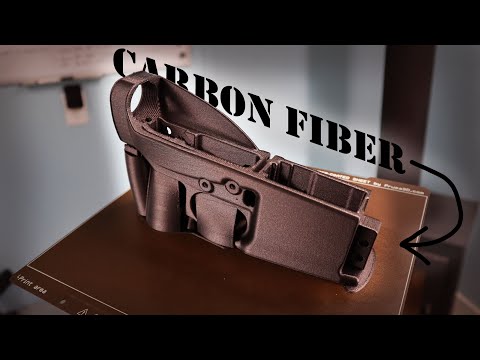
Stop Printing With Carbon Fiber Nylon

Published on October 10, 2024
Duration: 19:28

This guide synthesizes expert analysis from Hoffman Tactical on selecting 3D printing filaments for firearm components. It details material properties like stiffness, moisture resistance, yield strength, and creep, comparing common options like Carbon Fiber Nylon, PLA Pro, and PET-CF. The information is crucial for users aiming to print reliable and durable firearm parts, emphasizing the trade-offs between different materials based on extensive testing data.

Quick Summary

Hoffman Tactical recommends Bambu PET-CF for high-performance, long-term 3D printed firearm components due to its superior stiffness, resistance to moisture-related stiffness loss, and near-zero creep. While Carbon Fiber Nylon loses stiffness when wet, and PLA Pro is easier for beginners but less robust, PET-CF offers a reliable balance for demanding applications.

Chapters

  1. 00:00The Problem with Carbon Fiber Nylon
  2. 00:37Real-World Field Test
  3. 02:02Testing Methodology
  4. 04:21Stiffness and Yield Strength Data
  5. 06:51PET-CF as an Alternative
  6. 11:21Impact Resistance and Layer Adhesion
  7. 16:59Final Recommendations

Frequently Asked Questions

What is the main issue with using Carbon Fiber Nylon for 3D printed firearm components?

The primary issue is its significant loss of stiffness after moisture exposure. Nylon absorbs water, causing its stiffness to drop considerably over time, especially in humid environments, potentially leading to malfunctions under stress.

Which 3D printing filament does Hoffman Tactical recommend for high-performance, long-term firearm parts?

Hoffman Tactical recommends Bambu PET-CF for high-performance, long-term parts due to its superior stiffness, resistance to moisture-related stiffness loss, and near-zero creep compared to traditional nylons.

What are the key differences in performance between PLA Pro, PET-CF, and Carbon Fiber Nylon for firearm applications?

PLA Pro is easy to use but has low temperature resistance. Carbon Fiber Nylon loses stiffness when wet. PET-CF offers high stiffness, minimal creep, and good layer adhesion, making it a strong choice, though its impact resistance is lower than wet nylons.

Why is annealing important for Polymaker PA612-CF when used for firearm components?

Annealing Polymaker PA612-CF is a requirement to prevent creep. This post-processing step is crucial for maintaining the material's high stiffness and yield strength, ensuring its reliability under sustained stress in firearm applications.

Related News

All News →

More Gunsmithing & DIY Videos You Might Like

More from Hoffman Tactical

View all →