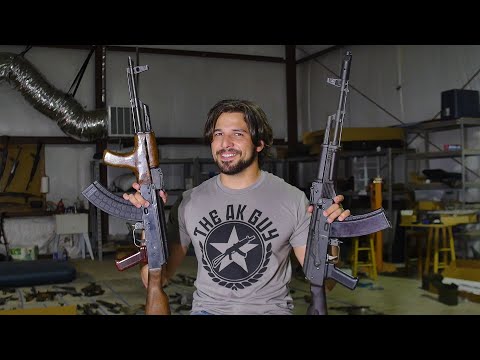
The RPK-74

Published on January 4, 2021
Duration: 8:28

This video provides an expert look at an RPK-74 clone built on a Vepr receiver, detailing its historical context and technical specifications. Brandon Herrera, a recognized subject matter expert, demonstrates the firearm's performance with a ballistics test, offering insights into terminal ballistics and energy transfer. The build emphasizes semi-automatic compliance and the use of authentic components where possible.

Quick Summary

An RPK-74 clone, built on a Vepr receiver and chambered in 5.45x39mm, showcases impressive ballistics. The high velocity from its 26-inch barrel causes significant target destruction, amplified by bullet yaw after initial impact, transferring more kinetic energy.

Chapters

  1. 00:00Introduction and History
  2. 01:33Technical Build Details
  3. 02:52Ballistics Demonstration
  4. 04:38Terminal Ballistics Explanation

Frequently Asked Questions

What is an RPK-74 clone and what are its key features?

An RPK-74 clone, like the one shown, is built on a Vepr receiver using original RPK-74 barrel components and furniture. It's chambered in 5.45x39mm, features a heavy barrel (often custom-turned), and is configured for semi-automatic fire with 40-round Bakelite magazines.

How does the 5.45x39mm round perform in ballistics tests?

The 5.45x39mm round demonstrates significant destructive potential on fluid-filled targets when fired from a 26-inch barrel due to its high velocity. It can impart substantial kinetic energy, especially when exhibiting yaw.

What is bullet yaw and how does it affect terminal ballistics?

Bullet yaw is the sideways rotation of a projectile. After passing through an initial target, a bullet may begin to yaw, deform, or split, causing it to impart more kinetic energy and thus more damage to subsequent targets.

Why are Vepr receivers often used for RPK-74 clones?

Vepr receivers are frequently used for RPK-74 clones because they are manufactured to similar specifications and often feature the characteristic bulged RPK-style receiver, making them a suitable base for replicating the original firearm's profile and function.

Related News

All News →

More Gunsmithing & DIY Videos You Might Like

More from Brandon Herrera

View all →