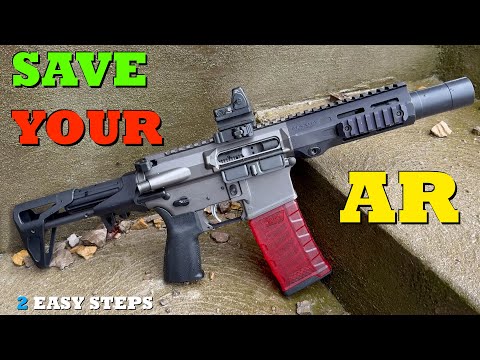
The Worst Thing You Can Do For Your AR

Published on June 1, 2020
Duration: 8:47

This guide details troubleshooting steps for an AR-15 build experiencing cycling failures, as demonstrated by Graham Baates. It covers inspecting the bolt carrier group, buffer tube, adjustable gas block, and trigger assembly for potential issues. The process emphasizes careful disassembly and reassembly to diagnose and resolve short-stroking or failure-to-cycle problems.

Quick Summary

Troubleshooting AR-15 cycling issues involves inspecting key components like the adjustable gas block, buffer system, and bolt carrier group for obstructions or friction. Ensuring proper gas flow and balance between lightweight parts is crucial for reliable function.

Chapters

  1. 00:00Introduction to the Build Fail
  2. 01:42Component Overview
  3. 02:17Gas System and Barrel
  4. 02:44The Cycling Issue
  5. 04:50Buffer and Carrier Details
  6. 06:12Internal Friction Check

Frequently Asked Questions

What are common causes of AR-15 short-stroking?

Short-stroking in an AR-15 is often caused by insufficient gas pressure reaching the bolt carrier group, excessive friction within the system, or an improperly tuned adjustable gas block. Lightweight components can exacerbate this if not balanced correctly.

How does an adjustable gas block help with AR-15 cycling?

An adjustable gas block allows fine-tuning of the gas entering the system. This is crucial for optimizing cycling reliability with different ammunition types, barrel lengths, and suppressor use, preventing issues like short-stroking or over-gassing.

What is the role of the buffer system in an AR-15?

The buffer system, consisting of the buffer tube, spring, and buffer, absorbs the rearward energy of the bolt carrier group after firing. Its weight and the spring tension are critical for controlling the cycling speed and ensuring reliable function.

Why is checking for friction points important when troubleshooting an AR-15?

Friction points, such as a tight bolt carrier group, misaligned buffer tube, or interference with the trigger assembly, can impede the BCG's rearward travel. This prevents the rifle from cycling properly, leading to failures to eject or feed.

Related News

All News →

More Gunsmithing & DIY Videos You Might Like

More from GBGuns

View all →