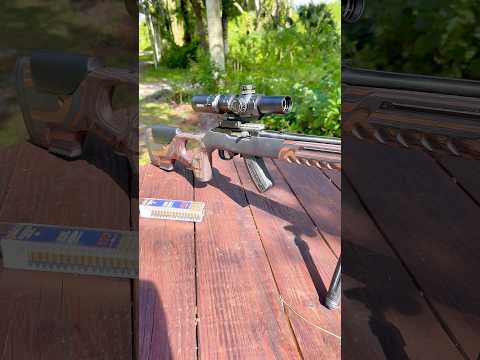
.22LR Velocity Test from 3 Different Barrel Lengths - 8 Types Ammo Tested

Published on November 17, 2025
Duration: 14:52

This guide details a methodical .22LR velocity test conducted by Buckeye Ballistics, comparing ammunition performance across three different Ruger barrel lengths (3.5", 10", and 18.5"). The test utilizes a Caldwell chronograph to gather empirical data on eight distinct .22LR loads, providing insights into how barrel length affects muzzle velocity and highlighting ammunition inconsistencies. The expert-level analysis emphasizes data collection and comparison for informed shooter decisions.


Quick Summary

Buckeye Ballistics conducted a .22LR velocity test comparing 8 ammunition types across 3 Ruger barrel lengths (3.5", 10", 18.5"). Using a Caldwell chronograph, the test revealed that longer barrels increase velocity, with high-performance loads like CCI Velocitor and Aguila Interceptor showing superior results, while Remington ammo exhibited notable inconsistency.

Chapters

  1. 00:00Introduction & Algorithm Strategy
  2. 01:05Firearms and Barrel Lengths
  3. 01:24Ammunition Selection
  4. 03:30Chronograph Testing Process
  5. 13:59Conclusion and Observations

Frequently Asked Questions

How does barrel length affect .22LR velocity?

Longer barrels generally increase .22LR muzzle velocity. The test showed significant gains moving from a 3.5-inch pistol barrel to a 10-inch and then an 18.5-inch rifle barrel, though the difference between the two longer barrels was less dramatic.

Which .22LR ammunition performed best in the velocity test?

High-performance loads like CCI Velocitor and Aguila Interceptor consistently produced higher velocities across all tested barrel lengths. Ammunition consistency varied, with Remington loads showing the most inconsistency.

What equipment is needed for a .22LR velocity test?

Essential equipment includes firearms with different barrel lengths (e.g., Ruger SR22, Charger, 10/22), various types of .22LR ammunition, and a chronograph (like the Caldwell Ballistic Precision Chronograph) set up securely on a tripod.

Why is testing .22LR velocity important?

Testing provides empirical data on how ammunition performs in specific firearms and barrel lengths, revealing actual velocity, potential for accuracy, and highlighting inconsistencies often not apparent from advertised specifications alone.

Related News

All News →

More Range & Competition Videos You Might Like

More from Buckeye Ballistics

View all →