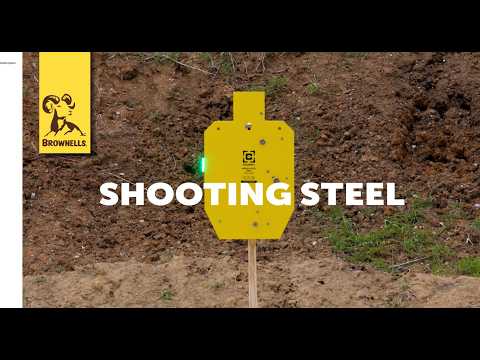
Everything about shooting steel targets

Published on October 4, 2014
Duration: 23:13

This guide synthesizes expert advice on the safe and effective use of steel targets, drawing from a Military Arms Channel video featuring Brad Brune of Challenge Targets. It covers critical safety aspects like appropriate distances for rifles and handguns, the importance of canting targets to manage fragmentation, and the superior durability of AR500/AR550 steel over mild steel. The guide also touches on target thickness, longevity, and mounting considerations, emphasizing that properly manufactured steel targets are a safe and cost-effective training tool when used correctly.

Quick Summary

For safe shooting with steel targets, use AR500 or AR550 hardened steel and maintain appropriate distances: 100+ yards for rifles, 7-10 yards for handguns. Always cant targets forward 10-20 degrees to direct fragments safely into the ground, avoiding the dangers of mild steel cratering and ricochets.

Chapters

  1. 00:00Introduction to Steel Targets
  2. 01:30Dangers of Mild Steel
  3. 04:56AR500 vs. AR550 Performance
  4. 08:56Target Thickness and Longevity
  5. 12:11Safe Shooting Distances
  6. 14:35Manufacturing: Laser vs. Water Jet
  7. 15:52Interactive Targets and Mounting
  8. 20:05Cost Effectiveness and Outro

Frequently Asked Questions

What are the main dangers of using mild steel targets for shooting?

Mild steel targets are dangerous because they crater deeply upon impact. These craters create sharp edges that can trap bullet fragments and cause unpredictable ricochets directly back towards the shooter, posing a significant safety risk.

What is the recommended safe shooting distance for steel targets?

For rifle calibers, maintain a minimum distance of 100 yards to prevent excessive plate wear and reduce ricochet risk. For handguns, a safe distance is typically 7-10 yards.

How should steel targets be positioned for maximum safety?

Steel targets should be canted forward at an angle of 10-20 degrees. This orientation ensures that bullet splatter and fragments are deflected safely into the ground, away from the shooter and bystanders.

What is the difference between AR500 and AR550 steel for targets?

For standard rifle rounds, AR500 and AR550 steel targets offer very similar performance regarding durability and resistance to cratering. While AR550 is harder, AR500 is generally sufficient for most quality target applications.

More Range & Competition Videos You Might Like

More from Military Arms Channel

View all →