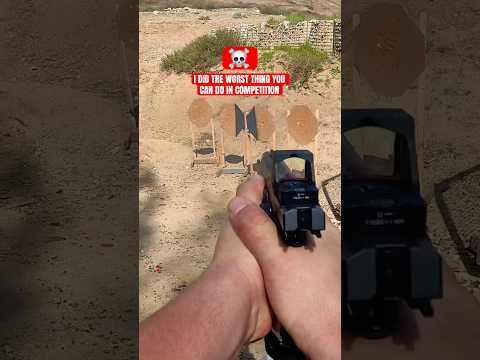
Rifle Training With Buck Doyle | Day & Night Shooting | Episode 3

Published on February 17, 2025
Duration: 48:21

This video details a competition day at Paloma Ranch, New Mexico, where participants apply skills learned over two previous days. The competition involves multiple stages, including day and night shooting scenarios, with an emphasis on practical application and accountability for performance. Instructors Buck Doyle and Kyle guide participants through stage briefings, execution, and scoring, highlighting the importance of safety and efficient target engagement.

Quick Summary

Day 3 of the rifle training course is dedicated to competition, applying learned skills in practical, timed stages. Participants engage steel targets with one hit and paper targets with two shots, with scores recorded on tablets. The training emphasizes safety, efficiency, and adapting to challenging conditions, including night vision shooting.

Chapters

  1. 00:18Introduction to Competition Day
  2. 00:39Stage Overview and Competition Format
  3. 01:45Warm-up Drill Execution
  4. 03:23Stage 1: Steel and Paper Engagement
  5. 13:18Stage 2: Barricade and Distance Shooting
  6. 17:21Stage 3: Long-Range Steel and Paper
  7. 23:10Stage 4: Multi-Position Engagement
  8. 26:03Afternoon Competition Stages
  9. 27:40Challenging Target Identification Stage
  10. 35:07Night Portion: Competition Begins
  11. 36:34Night Vision Equipment Challenges
  12. 42:21Night Stage Performance and Feedback
  13. 43:22Course Recap and Instructor Feedback
  14. 45:21Night Vision Training Insights
  15. 46:13Realism and Tactical Application Discussion

Frequently Asked Questions

What is the objective of Day 3 in the rifle training course?

Day 3 focuses on competition, applying all the skill sets learned on Days 1 and 2 in practical, timed stages. The goal is to test performance under pressure and hold participants accountable for their shooting accuracy and speed across various scenarios.

How are scores managed during the rifle competition?

Scores are managed using tablets. After completing each stage, participants report to score tabulators (Don or Buck) to review their performance, confirm the score, and then proceed.

What are the key considerations for engaging targets in the competition stages?

Key considerations include engaging steel targets with a single hit to advance, and paper targets with two shots per target. Efficiency, accuracy, and adherence to stage rules are paramount for achieving good scores.

What challenges are presented during the night vision shooting portion of the competition?

Night vision shooting presents challenges related to new equipment, such as unfamiliar lasers and optics, requiring adaptation and practice. Navigating and toggling through these systems under pressure can be difficult, especially without prior training on the specific gear.

What makes the training environment at Paloma Ranch significant?

Paloma Ranch offers a vast 44,000-acre facility with diverse elements like snow, mud, and high elevation (8,700 ft). This realistic, challenging environment allows for practical application of skills beyond a flat range, testing shooters' conditioning and adaptability.

More Range & Competition Videos You Might Like

More from ClassicFirearms

View all →