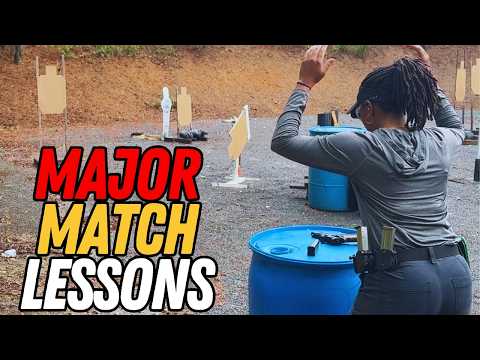
USPSA Showdown: Shots on the Line for the Loser!

Published on September 13, 2023
Duration: 23:31

This video follows three competitors in a USPSA match where the loser of each stage must take a shot of alcohol. The content highlights practical shooting techniques, stage strategy, and the importance of equipment maintenance, specifically zeroing red dot sights. One competitor experienced significant accuracy issues due to an un-zeroed optic, emphasizing the need for pre-match checks and consistent performance.

Quick Summary

In competitive shooting, maintaining a proper red dot sight zero is paramount for accuracy. An un-zeroed optic can lead to significant misses, costing valuable time and points. Competitors should always zero their sights before matches and be prepared to make adjustments based on stage conditions and target distances.

Chapters

  1. 00:00Introduction: The Stakes of the Match
  2. 01:32Stage 1: The Classifier
  3. 03:46Stage 7: Quick Shoot and Strategy
  4. 06:25Stage 1 Revisited: Optic Zero Issues
  5. 10:05Round 4, Stage 2: Speed vs. Caution
  6. 12:49Stage 3: Efficiency and Planning
  7. 15:33Round 6, Stage 5: Reloads and Movement
  8. 18:17Round 7, Stage 5: Final Stage Stakes
  9. 19:30Stage Analysis: Trigger Control & Accuracy
  10. 20:05Advanced Shooting: Seeing Streaks, Not Just Dots
  11. 21:04The Producer's Twist: Final Shots
  12. 22:06Day's Recap and Viewer Engagement

Frequently Asked Questions

What is the importance of zeroing a red dot sight in competitive shooting?

Zeroing a red dot sight is critical for accuracy in competitive shooting. An un-zeroed optic can lead to significant misses, costing time and points, as demonstrated when a competitor's sight was off by several clicks, causing shots to go high and wide.

How can shooters improve speed in competitive stages?

Improving speed involves efficient movement, practicing quick reloads, and developing advanced shooting techniques like seeing a streak or target zone rather than confirming every dot alignment. This allows for faster engagement, especially on closer targets.

What are the key elements of effective stage planning in USPSA?

Effective stage planning in USPSA involves analyzing target placement, considering movement efficiency between shooting positions, and timing dynamic elements. Understanding these factors helps shooters optimize their run for both speed and accuracy.

Why is trigger control important for both speed and accuracy?

Good trigger control is essential for maintaining accuracy on longer targets while also enabling rapid follow-up shots on closer targets. It ensures that when the sight is aligned, the trigger press is clean, resulting in a precise shot.

Related News

All News →

More Range & Competition Videos You Might Like

More from Tactical Hyve

View all →